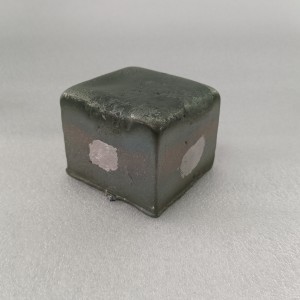

Manganese Copper M2052 Damping Alloy for Custom Vibration Damping
Customizable M2052 High-Damping Alloy
Production Process of M2052 Damping Alloy
The production process of M2052 damping alloy primarily consists of the following key steps:
- Vacuum Melting: Utilizing vacuum induction melting technology, high-purity raw materials such as manganese, copper, nickel, and iron are melted in a vacuum environment. This effectively prevents oxidation and gas absorption at high temperatures, ensuring precise chemical composition, uniform structure, and high purity of the alloy.
- Forging or Rolling: The ingot undergoes homogenization treatment followed by hot forging or hot rolling for breakdown. This process refines the as-cast structure and improves densification, creating a more uniform internal structure. This step is crucial for achieving excellent damping capacity and mechanical properties in the subsequent stages.
- Heat Treatment: Specific solution treatment and aging processes are applied to regulate the phase composition and microstructure of the alloy. This activates damping mechanisms, such as twin boundary movement, thereby achieving high damping capacity while optimizing the balance between strength and plasticity.
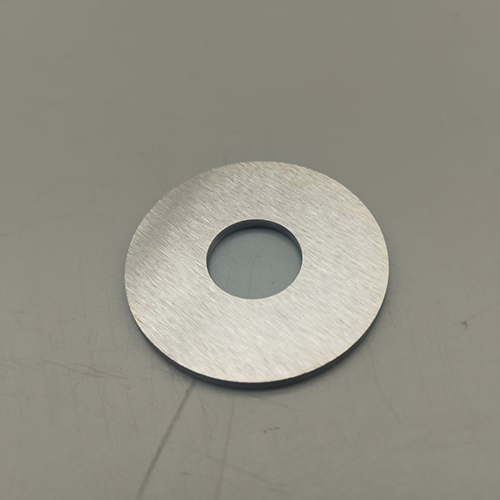
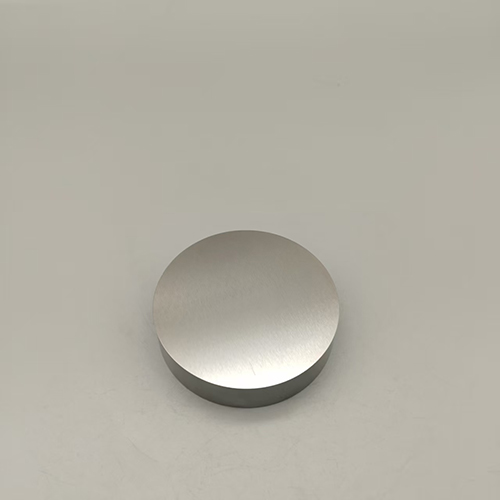
- Machining: Depending on the final application requirements, precision machining methods such as turning, milling, drilling, and grinding are employed to process the heat-treated material into components with specified dimensions and tolerances, meeting the shape and accuracy demands of various engineering applications.
These interconnected steps form the complete process chain, where parameter control at each stage directly influences the final performance of the M2052 alloy, ensuring its optimal effectiveness in vibration and noise reduction applications.