


If you have any exposure to PVD coatings, you must be familiar with the name “Cr”. From the most basic CrN to the higher-performance AlCrN, and various Cr-containing nanocomposite coatings, chromium is almost the “evergreen” element in coating formulations.
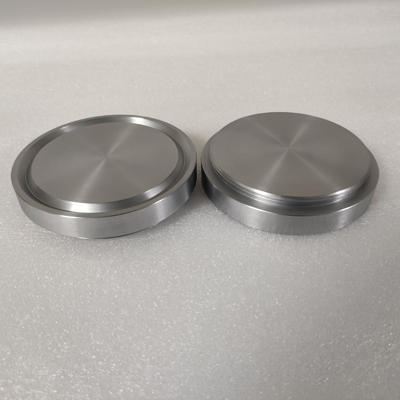
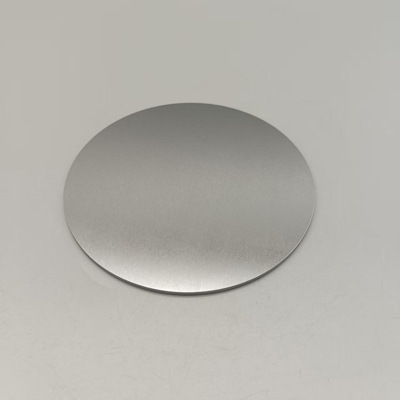
But have you ever wondered: in what form does chromium first enter the vacuum chamber? The answer is simple – chromium targets. Pieces of silver-white, high-purity (often 99.5% or higher) chromium metal targets are “knocked” into atoms by arc or magnetron sputtering, react with nitrogen, and deposit onto the surface of tools – only then do we get all the performance we talk about.
Why chromium? From target to coating, what makes it so good?
. CrN: A Solid and Reliable Foundation
Let’s start with the most classic CrN coating. Compared to its predecessor TiN, CrN may seem “moderate”, but it is exactly this moderation that makes it the top choice for many applications.
1. Lower friction coefficient
The surface of CrN naturally forms a very thin, dense chromium oxide (Cr₂O₃) layer, which has a low friction coefficient and inherent “lubricating” properties. Many precision components and plastic molds choose CrN because it resists material build-up and reduces workpiece galling.
2. High-temperature oxidation resistance
CrN remains stable in air up to approximately 700°C. While not as impressive as AlCrN, it is far superior to the temperature resistance of ordinary tool steels – perfectly adequate for moderate heat-load applications.
3. Nearly non-toxic chromium ions
Unlike TiN, which can release biologically toxic titanium ions in certain acidic environments, CrN offers better biocompatibility. For medical blades and food machinery coatings, CrN is a common choice.
4. Low internal stress – suitable for thick coatings
CrN exhibits low internal stress during deposition, allowing for thicker coatings – sometimes exceeding 10 microns without peeling. For heavy-load, high-wear applications, a thicker coating means longer tool life.
Simply put, CrN is an all-rounder: oxidation-resistant, wear-resistant, corrosion-resistant, low-friction, and biocompatible. While it may not be the best in any single category, it scores highly in every one.
Behind all these advantages lies the starting point – the chromium target. Compared to titanium targets, chromium targets offer more stable arc evaporation, fewer droplets (macroparticles), and produce smoother coating surfaces. This is why many molds requiring high surface finish prefer CrN – not because the process is more complex, but because the chromium target has an inherently “gentle” nature.
2. AlCrN: Amplifying Cr’s Advantages
If CrN is already so good, why develop AlCrN? Because adding Al significantly pushes the temperature resistance to a new level.
AlCrN coatings form a dense (Al,Cr)₂O₃ mixed oxide layer at high temperatures. This layer is even more compact and stable than Cr₂O₃, effectively blocking oxygen diffusion into the coating. The result – AlCrN can operate at temperatures up to 1000°C or even higher.
For dry cutting and high-speed machining – conditions where no coolant is available to dissipate heat – AlCrN has become the standard. Cr still plays a critical role here:
- Maintains coating toughness (pure AlN is too brittle)
- Preserves good adhesion to the substrate
- Provides corrosion resistance
In other words, Cr acts as the “stabilizer” in AlCrN, allowing Al to shine while preventing the coating from becoming too brittle.
From the target perspective, producing AlCrN is not trivial either. It typically doesn’t use two separate targets (one Cr, one Al) deposited alternately, but rather alloy targets – where Cr and Al are melted together in a specific atomic ratio. Common examples are Cr₈₀Al₂₀ (80% Cr, 20% Al) or Cr₇₀Al₃₀. Such alloy targets must be compositionally uniform and satisfy both magnetron sputtering and arc conductivity requirements. Why not pure Al targets? Because pure Al targets in arc mode tend to produce excessive droplets, resulting in rough coatings like sandpaper. The addition of Cr “tames” aluminum’s volatile nature, stabilizing the arc and producing dense coatings.
3. The Underlying Reasons: Why Cr is Always the Choice
Beyond specific coatings, let’s examine Cr’s material science “personality”.
1. Natural passivation capability
Chromium is a well-known passive metal. Whether as a nitride or in its metallic form, it rapidly forms a continuous, dense, self-healing oxide layer in oxidizing environments. This property directly translates into high-temperature oxidation resistance and corrosion resistance of the coating.
2. Moderate affinity for nitrogen
The bonding strength between Cr and N is neither too strong nor too weak. If too strong, the coating – like TiN – tends to form macroparticles (droplets) and rough surfaces. If too weak, hardness suffers. CrN sits precisely at that sweet spot: easy to deposit, dense, and sufficiently hard.
This directly reflects on the target: chromium targets offer extremely stable arc discharge. Unlike certain high-melting-point metals (such as Al or Si) that tend to produce micro-explosions and spitting, chromium targets evaporate uniformly throughout their lifetime. This translates to good batch-to-batch coating consistency and low rejection rates – something coating facilities naturally appreciate.
3. Thermal expansion coefficient close to steel
PVD coatings grow on steel substrates. If there is a large mismatch in thermal expansion coefficients between coating and steel, significant internal stress develops upon heating and cooling, leading to coating delamination. Cr-based coatings have thermal expansion coefficients very close to those of die steels and high-speed steels – like wearing a well-fitted pair of shoes – making them resistant to delamination under thermal cycling.
4. Easy solid solution formation with other elements
Cr readily forms stable solid solutions or composite structures with elements such as Al, Ti, and Si. Moreover, the addition of Cr often improves the fracture toughness of the coating. Pure ceramic coatings are typically hard but brittle; an appropriate amount of Cr introduces a degree of plastic deformability under impact, preventing the coating from shattering like glass.
This explains why so many alloy targets on the market contain chromium: AlCr, TiCr, CrSi – each tailored to a specific set of application demands. It is fair to say that chromium targets are the “all-rounder” among PVD targets – capable of performing solo and harmonizing well with others.
4. Why “Indispensable”?
To summarize, the coating industry cannot do without Cr because it scores high on several core dimensions simultaneously:
- Oxidation resistance: dense, self-healing oxide layer
- Adhesion: good thermal match, resistant to peeling
- Toughness: more impact-resistant compared to other transition metal nitrides
- Process window flexibility: chromium targets are moderately priced, readily available, and offer excellent arc evaporation characteristics, with a wide processing parameter window
More importantly, Cr is an excellent ”formulation element”. CrN works alone. Add Al and you get AlCrN. Add Si and you get AlCrSiN. Or use it as an underlayer or transition layer. Unlike some specialty elements that are picky about processes, equipment, and substrates, Cr gets along well with virtually all mainstream PVD equipment and all common tool steels.
So back to the original question: why is Cr so useful?
Because it is balanced, stable, and versatile. Starting from an ordinary chromium target, through the plasma within a PVD chamber, it transforms into CrN, AlCrN, AlCrSiN – quietly protecting cutting tools, molds, and medical devices, enhancing machining efficiency and service life. In the complex game of coating – where hardness, toughness, high-temperature resistance, adhesion, performance, and cost all must be balanced – Cr is often the “least objectionable” choice. And many times, the least objectionable is precisely the best.
Next time you pick up an AlCrN-coated end mill or a CrN-coated mold, take a moment to think: this unassuming element, chromium, is truly the master key of the coating world. And supporting it all – piece by piece – are those chromium targets quietly eroding inside the chamber.
Post time: May-30-2026