

In thin-film deposition processes, alumina (Al₂O₃) sputtering targets are widely used in semiconductors, optical coatings, and wear-resistant coatings due to their excellent insulation properties, high-temperature resistance, and chemical stability. However, as a ceramic material, alumina has poor thermal conductivity and low mechanical strength, which can affect sputtering stability and target lifespan. Therefore, bonding a metal backing plate is a critical technique to optimize its performance.
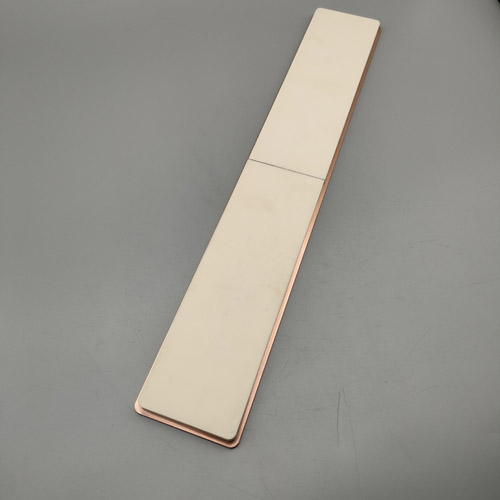
This article explores why alumina targets require backing plates, compares different backing plate materials, and provides selection guidelines to help engineers optimize sputtering processes.
1. Three Key Reasons for Using Backing Plates with Alumina Targets
1.1 Addressing Poor Thermal Conductivity Alumina’s thermal conductivity is only 30 W/(m·K), far lower than metals like copper (400 W/(m·K)).
During sputtering, ion bombardment generates significant heat. Without efficient heat dissipation:
Localized overheating can cause cracks or fractures.
Non-uniform film composition affects coating quality. Metal backing plates (e.g., copper, molybdenum) rapidly dissipate heat, ensuring stable sputtering.
1.2 Enhancing Mechanical Support to Prevent Breakage
Alumina is a brittle ceramic with low flexural strength (~300 MPa), making it prone to cracking under stress.
Metal backing plates (e.g., titanium, stainless steel) provide rigid support, reducing breakage risks from vibration or thermal stress.
1.3 Compatibility with Different Sputtering Modes
DC Sputtering: Requires conductive targets, but Al₂O₃ is an insulator. The backing plate acts as an electrode.
RF Sputtering: Works with insulators but is less efficient. A metal backing plate improves electric field distribution and deposition rates.
2. Comparison of Common Backing Plate Materials & Selection Guide
| Material | Thermal Conductivity (W/m·K) | Advantages | Disadvantages | Best Applications |
|---|---|---|---|---|
| Copper (Cu) | 400 | Best thermal conductivity, cost-effective | Risk of contaminating high-purity films | Industrial coatings, high-power sputtering |
| Molybdenum (Mo) | 138 | High-temperature stability, low contamination | Moderate thermal conductivity, expensive | Semiconductors, optical coatings |
| Titanium (Ti) | 22 | Biocompatible, non-contaminating | Poor thermal conductivity, requires cooling | Medical implant coatings |
| Copper-Beryllium (Cu-Be) | 200 | High strength, resists deformation | Toxic beryllium requires special handling | Large targets, high-stress environments |
Selection Recommendations
Semiconductors/Optical Coatings → Molybdenum backing plate (low contamination, high stability)
Industrial Wear-Resistant Coatings → Copper backing plate (high thermal conductivity, cost-effective)
Biomedical Films → Titanium backing plate (non-toxic, biocompatible)
3. Backing Plate Optimization Techniques for Better Sputtering Performance
3.1 Interlayer Technology Adding a tantalum (Ta) or nickel (Ni) interlayer (50–100 μm) between the alumina target and copper backing plate prevents copper diffusion.
3.2 Water-Cooled Backing Plates Integrated microchannel cooling systems enhance heat dissipation by 3–5×, ideal for high-power sputtering (>10 kW).
3.3 Graded Material Backing Plates Copper-molybdenum composite plates balance thermal conductivity and thermal expansion matching, reducing interfacial stress.
4. Future Trends
Smart Backing Plates: Embedded temperature sensors for real-time monitoring.
3D-Printed Backing Plates: Custom cooling channels for optimized thermal management.
Nano-Coated Backing Plates: Graphene/aluminum nitride coatings to further improve thermal conductivity.
Bonding a backing plate to alumina targets solves their poor thermal conductivity, brittleness, and insulation limitations. Copper backing plates dominate industrial applications, while molybdenum/titanium plates are preferred for high-purity films. Future advancements in smart cooling and 3D-printed backing plates will further enhance sputtering efficiency and film quality.
Optimizing backing plate selection significantly improves sputtering stability and target lifespan. Choose materials based on specific application requirements.
Post time: Sep-23-2025