


In the vast expanse of materials science, special alloys stand out as brilliant “performance stars.” They are not created for ordinary needs but are engineered as “special forces” for extreme operating conditions. From soaring jet aircraft and deep-sea explorers to the heart stents inside the human body, special alloys are ubiquitous.
This article will delve into the world of these mysterious materials that underpin modern high-end manufacturing, analyzing them from four dimensions: definition & classification, core properties, specific grades, and application scenarios.
What are Special Alloys?
Special alloys refer to metallic materials manufactured through precise chemical composition design and specialized preparation processes (such as vacuum melting, powder metallurgy) to achieve specific physical, chemical, or mechanical properties.
Unlike ordinary carbon steel, special alloys are typically designed for service in extreme environments. They not only possess high strength and toughness but also often exhibit special functions such as high-temperature resistance, corrosion resistance, wear resistance, and even shape memory.
Core Classifications and Typical Grades of Special Alloys
Based on the matrix element and performance characteristics, special alloys are mainly divided into the following categories. Remembering these grades will help you navigate the world of industrial manufacturing and procurement.
1. Nickel-Based Superalloys: The Heart of Jet Engines
Nickel-based alloys are among the brightest stars in the special alloy family, capable of long-term operation under high temperatures (above 600°C) and stress.
GH4169 (Inconel 718)
Characteristics: This is one of the most widely used wrought superalloys. It exhibits excellent comprehensive performance in the temperature range of -253°C to 700°C, with yield strength at temperatures below 650°C ranking highest among wrought superalloys. It also possesses good fatigue resistance, radiation resistance, oxidation resistance, and corrosion resistance. Its ultimate tensile strength can reach up to 1700 MPa.
Applications: Widely used in manufacturing various static and rotating components in aerospace engines, such as turbine discs, rings, casings, blades, shafts, and fasteners.
GH4720
Characteristics: A highly alloyed nickel-based superalloy with high-temperature strength and good creep resistance.
Applications: Turbine discs in advanced aircraft engines, which bear extremely high thermal stresses.
2. Corrosion-Resistant Alloys: Shields Against Chemical Attack
These alloys are mainly used in harsh corrosive environments like chemical processing and marine engineering.
Hastelloy C-276 (UNS N10276)
Characteristics: This is an improved version of Hastelloy C, offering equally excellent corrosion resistance with significantly improved processability, along with good high-temperature performance. It provides outstanding resistance to a wide variety of corrosive media, including strong oxidizing agents, wet chlorine gas, formic acid, and acetic acid. Density is 8.89 g/cm³
Applications: Chemical reactors, flue gas desulfurization equipment, pharmaceutical equipment.
Monel 400 (UNS N04400)
Characteristics: A nickel-copper alloy with excellent resistance to rapidly flowing seawater and exceptional performance in hydrofluoric acid.
Applications: Marine propeller shafts, desalination equipment, pump and valve components.
3. Titanium Alloys: Kings of Lightweighting
Titanium alloys are renowned for their extremely high specific strength (strength-to-density ratio) and excellent biocompatibility.
TC4 (Ti-6Al-4V / Grade 5)
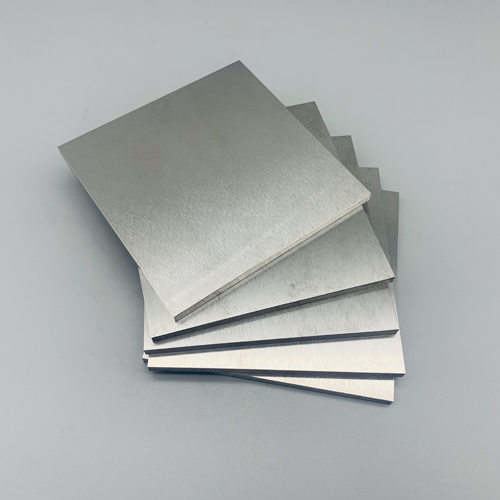
Characteristics: The most classic α+β titanium alloy, accounting for more than half of total titanium alloy production. The National Materials Corrosion and Protection Data Center hosts chemical composition analysis reports and related mechanical property data for TC4 alloy ingots.
Applications: Aircraft landing gear, airframes, artificial hip joints, golf club heads. TC4 powder is also used in precision additive manufacturing/repair technologies.
Ti-6Al-2Sn-4Zr-2Mo
Characteristics: A high-temperature titanium alloy with a service temperature limit up to 540°C and superior creep resistance compared to TC4.
Applications: Compressor blades and casings in aircraft engines.
4. Ultra-High Strength Steel: The Backbone of Aircraft
Achieves ultra-high strength by adding alloying elements to the iron matrix and employing special heat treatments.
300M
Characteristics: A low-alloy ultra-high strength steel with an ultimate tensile strength reaching above 1860 MPa. Achieves an excellent combination of strength and toughness through secondary hardening/quenching processes.
Applications: Aircraft landing gear, capable of withstanding dynamic impact loads exceeding 200 tons.
5. Cobalt-Based Alloys and Non-Magnetic Alloys: Versatile Performers in Extreme Conditions
MP35N (AMS 5844 / UNS R30035)
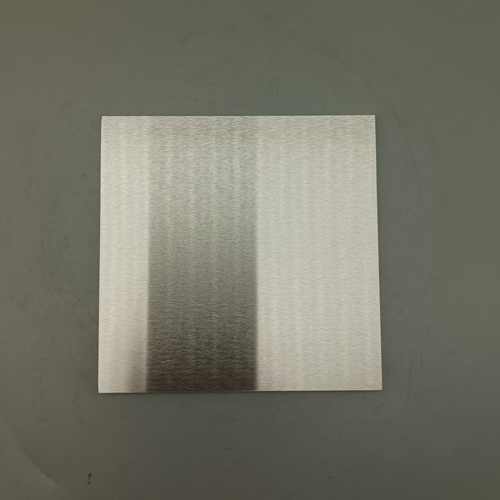
Characteristics: A cobalt-based alloy, non-magnetic, with ultra-high tensile strength (achievable up to 300 ksi, approximately 2068 MPa, through work hardening and aging treatment), and excellent resistance to chlorides. Typically produced using Vacuum Induction Melting (VIM) followed by Vacuum Arc Remelting (VAR).
Applications: Aerospace fasteners, medical implants, deep-sea submersible components, oil and gas well equipment.
6. Cemented Carbides and Shape Memory Alloys
Cemented Carbide (YG/YT Classes)
Characteristics: Manufactured via powder metallurgy. Tungsten-Cobalt (YG) grades are suitable for machining brittle materials like cast iron; Tungsten-Cobalt-Titanium (YT) grades are suitable for machining steel.
Applications: Cutting tools, cold drawing dies, mining drill bits.
Nickel-Titanium Shape Memory Alloy (Nitinol)
Characteristics: Exhibits shape memory effect and superelasticity.
Applications: Apollo lunar module antenna (automatically deployed by heat on the moon), coronary stents.
Manufacturing Processes for Special Alloys
The “special” nature of these alloys relies on advanced metallurgical processes:
Vacuum Melting Technology: Using Vacuum Induction Melting (VIM) combined with Vacuum Arc Remelting (VAR) can control oxygen content to very low levels, refine inclusion size, and greatly enhance material purity and fatigue life. For example, MP35N alloy is typically produced via this route.
Powder Metallurgy: Used to prepare alloys that are difficult to deform (e.g., Oxide Dispersion Strengthened alloys), allowing grain sizes to be controlled down to the nanometer scale. TC4 alloy powder is used in precision additive manufacturing/repair technologies.
Controlled Rolling and Controlled Cooling: Achieves uniform microstructure and significantly enhanced properties by precisely controlling rolling temperature and cooling rate.
As commercial spaceflight enters a critical industrialization window between 2026 and 2030, demand for special alloys is surging. High-strength, high-conductivity copper alloys (used in rocket engine combustion chambers), niobium/tantalum alloys (for radiation-resistant components), and superalloys (for hot engine sections) are poised for systemic growth. Mastering the grades and applications of special alloys is key to entering the realm of high-end manufacturing.
Post time: Mar-04-2026