

Vacuum Induction Melting (VIM) is a key specialized metallurgical process for producing high-end metal materials. It involves heating, melting, refining, and finally casting metal into ingots within a sealed environment under high vacuum or inert gas protection, utilizing the principle of electromagnetic induction. The metal ingots produced by this method are known as Vacuum Induction Melting alloy ingots, often serving as high-quality feedstock for further processing.
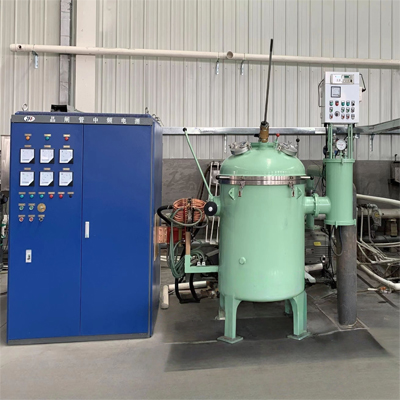
1. Process Principle and Brief Workflow
The core of this technology lies in the effective combination of ”vacuum” and ”induction.”
Vacuum Environment: The entire melting process takes place in an evacuated furnace chamber. This serves three primary purposes: firstly, to efficiently remove harmful gases such as hydrogen, oxygen, and nitrogen from the molten metal; secondly, to prevent the oxidation and loss of reactive elements like aluminum, titanium, and rare earths at high temperatures, enabling precise compositional control; and thirdly, to volatilize and remove trace low-melting-point harmful impurities like lead and bismuth, thereby significantly enhancing material purity.
Induction Heating: Alternating current passes through an induction coil surrounding a refractory crucible, generating an alternating electromagnetic field. This induces eddy currents within the charge (raw materials), causing them to heat up and melt through internal resistance. This non-contact heating method avoids contamination from the heat source itself.
Refining and Forming: The molten metal is held under vacuum for a period to complete degassing and harmful impurity volatilization. The crucible is then tilted to pour the metal into preheated molds where it solidifies, forming dense alloy ingots.
2. Key Advantages of the Process
Thanks to its unique operating environment, the VIM process imparts several superior characteristics to the alloy ingots:
Exceptionally High Purity: Capable of producing metal with extremely low gas and impurity content, making it an essential method for obtaining ultra-high-purity materials.
Precise Composition Control: Particularly advantageous for the accurate addition and retention of easily oxidizable elements, ensuring the accuracy and uniformity of complex alloy compositions and excellent batch-to-b consistency.
Superior Comprehensive Properties: High purity and precise compositional control directly translate into enhanced mechanical properties (such as strength, toughness, fatigue strength), corrosion resistance, and high-temperature stability of the material.
High-Quality Ingot Structure: By optimizing process parameters, ingots with minimal segregation, reduced shrinkage porosity, and a uniform microstructure can be obtained, providing a sound foundation for subsequent processing.
3. Primary Application Fields
VIM alloy ingots represent the starting point in the supply chain for many high-performance materials, primarily serving cutting-edge fields with extreme reliability requirements:
Aerospace: Used to produce critical components such as engine superalloy turbine disks and blades, titanium alloy structural parts, and ultra-high-strength steel landing gear components.
Energy & Power Generation: Employed in manufacturing heavy-duty gas turbine blades, core components for nuclear power equipment, and high-end marine propulsion system materials.
Biomedical: Serves as the primary feedstock for biocompatible materials like titanium alloys and cobalt-chromium alloys used in surgical implants (e.g., artificial joints, bone plates).
High-End Instrumentation & Electronics: Used to produce functional alloys such as special magnetic materials, precision elastic components, and thermostatic bimetals.
Research & Development: Provides precisely composed, pure samples for fundamental research and development of new materials.
4. Product Form and Subsequent Processing
Depending on downstream requirements, alloy ingots can be cast into various specifications, such as round or square shapes. Ingot surfaces are typically turned or ground to ensure quality for further processing. They can be directly used in hot working processes like forging or rolling, or serve as consumable electrodes for secondary refining processes like Vacuum Arc Remelting (VAR) to meet even more stringent application standards.
In summary, Vacuum Induction Melting (VIM) alloy ingots represent a high standard of metal material production in terms of purity and precision control. By integrating the advantages of vacuum metallurgy and induction heating, this process effectively overcomes the limitations of purity and compositional control inherent in conventional melting methods. It has become an indispensable foundational step in manufacturing high-performance, high-value-added specialty metals. The performance breakthroughs of many advanced systems are fundamentally reliant on the superior material properties established during the vacuum induction melting stage of their critical components.
Post time: Dec-25-2025