

Nickel-based alloys, as a critical component within the modern industrial materials system, play an indispensable role in aerospace, energy and chemical engineering, and high-end medical fields due to their exceptional high-temperature strength, superior corrosion resistance, and good fatigue performance. However, the realization of these cutting-edge properties largely depends on the material’s high purity and compositional precision—extraordinary qualities bestowed precisely by Vacuum Induction Melting (VIM) technology. This article delves into the precise process of vacuum induction melting for nickel alloy ingots, reveals the unique properties thus obtained, and showcases their core applications in advanced fields.
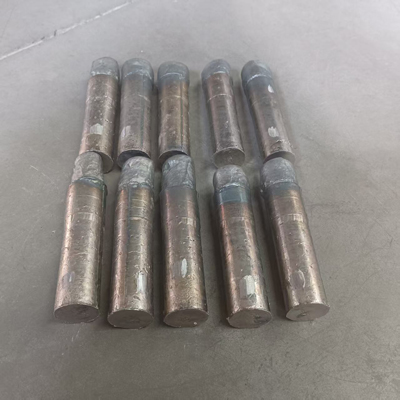
Vacuum Induction Melting: “Alchemy” in a Vacuum
Vacuum Induction Melting is an advanced process for heating, melting, and casting special metals under vacuum or inert gas protection, utilizing the principle of electromagnetic induction. For nickel alloys, this process is not merely simple melting and shaping but an art of precise metallurgical purification and composition control.
1. Analysis of the Core Process
The entire process begins with rigorous preparation. First, high-purity raw metals such as nickel, chromium, cobalt, molybdenum, aluminum, and titanium are precisely calculated and weighed according to the target alloy grade (e.g., Inconel 718, Hastelloy X). These materials are charged into a crucible made of high-purity ceramic materials (such as magnesia, alumina). Subsequently, the melting chamber is sealed and evacuated to a high vacuum state (typically achievable in the range of 10^-2 Pa to 10^-4 Pa) to completely eliminate the influence of air.
The core melting stage then commences. A medium or high-frequency alternating current is passed through the copper induction coil surrounding the crucible, generating an alternating magnetic field. This field induces powerful eddy currents within the conductive metal charge, causing the metal itself to heat up due to electrical resistance, gradually melting it. Under vacuum, this process offers several key benefits:
Efficient Degassing: The vacuum environment significantly reduces the partial pressure of harmful gases such as hydrogen, oxygen, and nitrogen, promoting the escape of gases (particularly hydrogen and nitrogen) dissolved in the melt, effectively preventing porosity and hydrogen embrittlement in the final product.
Control of Reactive Elements: For elements prone to oxidation like aluminum and titanium, the vacuum environment prevents their loss, ensuring the precise amount added for strengthening phases is retained.
Removal of Volatile Impurities: Harmful low-melting-point impurities (such as lead, bismuth, antimony) are more likely to volatilize and be pumped away under vacuum and high temperature, greatly enhancing metal purity.
Once completely molten and reaching the predetermined temperature, the melt undergoes refining and holding to ensure composition homogenization and further purification. Finally, the melt is poured into preheated metal molds, solidifying into alloy ingots. All parameters of the melting process, such as vacuum level, power curve, temperature, and time, are precisely controlled by a computer system to ensure batch-to-brist stability.
2. Comparative Advantages
Compared to conventional atmospheric melting or non-vacuum induction melting, Vacuum Induction Melting holds decisive advantages:
Ultra-Low Impurity Content: Interstitial element contents like oxygen, nitrogen, and hydrogen can be reduced by an order of magnitude or more.
Precise Composition: Virtually no element loss, allowing for extremely precise alloy composition control.
Uniform Structure: The electromagnetic stirring force in vacuum promotes highly uniform melt composition and temperature.
The Exceptional Characteristics of VIM Nickel Alloy Ingots
Nickel alloy ingots that have undergone the “baptism” of Vacuum Induction Melting experience a qualitative leap in intrinsic quality, laying the foundation for their role as high-end materials:
1. Extraordinary Purity and Microstructural Density
Extremely low gas and impurity content fundamentally eliminates potential sources of internal defects. This makes the alloy ingots less prone to internal cracking during subsequent hot-working processes like forging and rolling, significantly improving the fatigue strength and fracture toughness of the final product.
2. Outstanding High-Temperature Mechanical Properties
The core advantage of nickel-based alloys lies in their high-temperature strength. VIM ensures the precise proportioning of strengthening phase-forming elements like γ’ (e.g., Ni₃(Al, Ti)) and γ” (e.g., Ni₃Nb). These nano-scale strengthening phases effectively impede dislocation movement at high temperatures, enabling the alloy to maintain remarkable strength and creep resistance in environments up to 700°C or even above 1000°C.
3. Ultimate Resistance to Environmental Corrosion
High purity means reduced segregation of harmful impurities at grain boundaries, while corrosion-resistant alloying elements like chromium, molybdenum, and tungsten are fully retained and uniformly distributed in the vacuum environment. This allows the material to form a stable, dense protective oxide film in harsh oxidizing, sulfidizing atmospheres, as well as acidic and alkaline media, exhibiting excellent resistance to uniform corrosion, pitting, and stress corrosion cracking.
4. Excellent Processability and Forming Potential
The pure and uniform as-cast ingot structure provides an excellent starting point for subsequent homogenization treatments, hot working (forging, extrusion), and cold working, improving material formability and yield rates.
Vacuum Induction Melting, this modern metallurgical art performed in the silence of a vacuum, pushes the potential of nickel-based alloys to its extreme. It is not merely a melting process but a core technology safeguarding national competitiveness in aerospace, energy security, and high-end manufacturing.
Post time: Dec-31-2025