


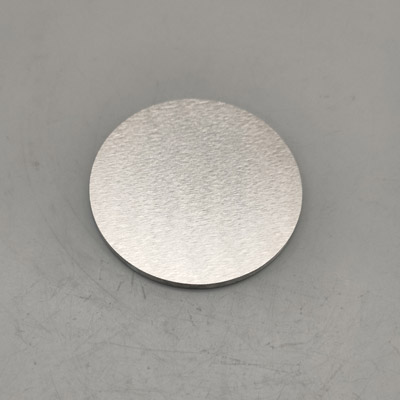
Nickel-cobalt-chromium (Ni-Co-Cr) sputtering targets serve as crucial functional materials with extensive application value in thin-film deposition technologies. This paper systematically reviews the fundamental properties, fabrication processes, quality control methods, and current industrial applications of Ni-Co-Cr targets, while also providing insights into future development prospects.
Ni-Co-Cr sputtering targets are alloy targets composed of nickel (Ni), cobalt (Co), and chromium (Cr) in specific ratios, primarily used in physical vapor deposition (PVD) and chemical vapor deposition (CVD) processes. Due to their excellent corrosion resistance, high-temperature stability, and mechanical properties, these targets are widely applied in aerospace, electronic devices, decorative coatings, and other fields.
Fundamental Properties of Ni-Co-Cr Targets
1.1 Physicochemical Properties Ni-Co-Cr alloys exhibit a face-centered cubic (FCC) crystal structure, with their physicochemical properties determined by the elemental composition. The typical composition range is Ni (60-70%), Co (15-25%), and Cr (10-20%), which provides: High melting point Good electrical and thermal conductivity Superior oxidation and corrosion resistance High mechanical strength and hardness
1.2 Microstructural Characteristics The microstructure of Ni-Co-Cr targets directly influences their sputtering performance and thin-film quality. An ideal microstructure should feature: Uniform phase distribution Fine grain size Low porosity .Absence of macrosegregation and inclusions
2. Fabrication Processes of Ni-Co-Cr Targets
2.1 Raw Material Selection and Pretreatment High-purity metals (≥99.95% Ni, Co, Cr) Pretreatment steps: acid cleaning, ultrasonic cleaning to remove surface oxides and contaminants
2.2 Melting Processes Primary methods include vacuum induction melting (VIM) and arc melting: Weighing raw materials according to design ratios Melting under vacuum or protective atmosphere Casting into ingots Homogenization annealing
2.3 Thermomechanical Processing Hot rolling/forging: Improves as-cast structure and eliminates casting defects Cold rolling/forging: Enhances density and mechanical properties Intermediate annealing: Relieves work hardening
2.4 Machining and Surface Treatment Precision machining to required dimensions and shapes Surface polishing Cleaning and packaging
3. Application Fields of Ni-Co-Cr Targets
3.1 Aerospace Industry
Used for high-temperature alloy coatings to enhance the thermal and oxidation resistance of turbine blades and other components.
3.2 Electronics Industry
- Diffusion barriers and seed layers in semiconductor devices
- Magnetic recording media
- Thin-film resistors
3.3 Decorative Coatings
Applied in high-end watches, eyeglass frames, and other products for durable and aesthetically pleasing finishes.
3.4 Other Applications
- Solar absorption coatings
- Tool hard coatings
- Biomedical implant surface modifications
Key Performance Comparison: Ni-Co-Cr vs. Other Targets
| Characteristic | Ni-Co-Cr Target | Pure Ni Target | Ni-Cr Target |
|---|---|---|---|
| Deposition Rate | ★★★★☆ | ★★★☆☆ | ★★★★☆ |
| Film Adhesion | ★★★★★ | ★★★☆☆ | ★★★★☆ |
| Corrosion Resistance | ★★★★★ | ★★☆☆☆ | ★★★★☆ |
| Cost | ★★★☆☆ | ★★★★☆ | ★★★☆☆ |
| Process Tolerance | ★★★★☆ | ★★☆☆☆ | ★★★☆☆ |
Ni-Co-Cr sputtering targets remain a vital functional material with significant potential for performance optimization and application expansion. With advancements in fabrication technologies and emerging application demands, these targets will play an increasingly important role in high-tech industries. Future research should focus on composition design, microstructure control, and cost-effective optimization to meet growing market needs.
Post time: Sep-24-2025