





The common ratios of nickel-chromium targets are not a single fixed value, but rather a series formed around different application requirements. Among them, Ni80Cr20 is the most widely used and most mature mainstream choice in the supply chain, while other ratios serve specific thin-film performance requirements. According to non-ferrous metal industry standard documents, nickel-chromium alloy targets can be classified by composition into grades such as Ni93Cr7, Ni90Cr10, Ni80Cr20, Ni70Cr30, Ni60Cr40, Ni56Cr44, and Ni50Cr50. The following focuses on the most commonly used ratios.
Ni80Cr20: The Most Commonly Used “Standard Grade”
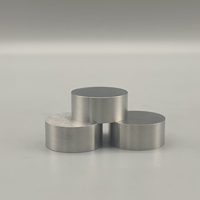
This is the “standard grade” of nickel-chromium targets. It features balanced overall performance, good process stability in magnetron sputtering, and is a mature choice for applications such as low-emissivity glass barrier layers. The chromium content of commercial products is typically controlled at around 20±1 wt%, with strict limits on impurities such as iron, copper, and cobalt. Domestic suppliers also typically lead with an 80:20 ratio in their regular supply and support customization of other ratios on demand.
Ni90Cr10: A Dedicated Ratio for Thermocouples and High-Temperature Sensing
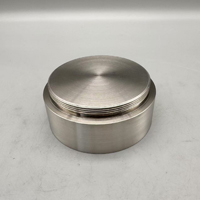
This ratio corresponds to the composition of T1-type thermocouple alloy, and its sputtered thin films exhibit specific thermoelectric properties, making it suitable for scenarios requiring precise temperature sensing or oxidation-resistant coatings. Product information from
Ni70Cr30 and Ni60Cr40: Adjustment Tiers for Medium-to-High Chromium Ratios
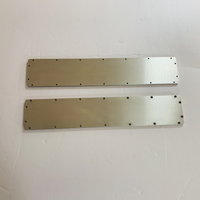
As the chromium content increases, the resistivity and corrosion resistance of the thin film typically change accordingly. These medium-to-high chromium ratio targets can be used to adjust thin-film resistance or improve durability in specific environments.
For Ni60Cr40, commercial supply includes 40/60 wt% specifications (i.e., Ni40Cr60 or the corresponding high-chromium end), used for physical vapor deposition of thin-film resistors or protective coatings. In domestic suppliers’ regular catalogs, 60:40 is also one of the common optional ratios. Some studies have used Ni60(at%)-Cr40(at%) alloy targets to deposit thin-film resistor layers to obtain specific sheet resistance and temperature coefficient of resistance.
Ni50Cr50: The Special Positioning of the Equal Ratio
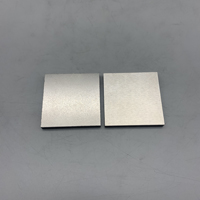
This is another commonly seen option at the other end; some suppliers offer it as a regular composition ratio. The equal-ratio composition is selected in certain scenarios requiring specific etching characteristics or thin-film electrical properties. Some manufacturers also offer targets with a Ni:Cr = 1:1 (atomic ratio) composition. It should be noted that when the chromium content is high, the manufacturing difficulty of the target increases, and some large-sized products may use a segmented splicing structure.
Application Scenario Overview
The choice of different ratios is essentially a trade-off regarding thin-film performance:
| Ratio | Main Characteristics | Typical Application Direction |
|---|---|---|
| Ni80Cr20 | Mature process, balanced overall performance | Low-emissivity glass barrier layers, general functional coatings |
| Ni90Cr10 | Clear thermoelectric performance, oxidation resistance | Thin-film temperature sensors, protective coatings |
| Ni60Cr40 / Ni70Cr30 | Adjustable resistivity, improved corrosion resistance | Thin-film resistors, specific protective coatings |
| Ni50Cr50 | Equal atomic ratio, specific electrical/etching requirements | Research or special functional thin films |
Post time: Nov-16-2026