



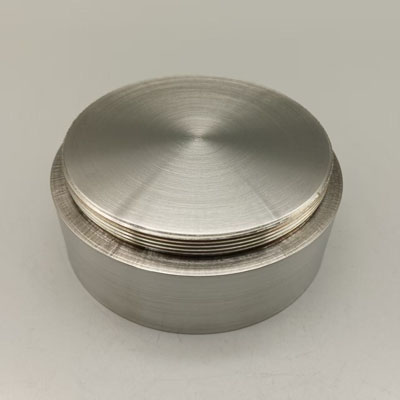
Manganese-Cobalt Alloy Target is an advanced functional material synthesized from cobalt and manganese in specific proportions, used to form functional thin films on substrates through physical vapor deposition technology. It perfectly combines cobalt’s high magnetic properties and excellent heat resistance with manganese’s outstanding corrosion resistance and electrochemical activity.
Through the alloying effect, the material exhibits synergistic enhancement in wear resistance, electrical conductivity, and chemical stability.
Surprisingly, this seemingly ordinary alloy has become an indispensable core material in modern industry, playing a key role in the development of electronic devices and energy storage technologies.
Characteristics and Advantages: Why is Manganese-Cobalt Alloy Target Highly Favored?
Physical and Chemical Characteristics
The core value of this material lies in its unique combination of properties:
Cobalt provides high magnetic permeability and thermal stability
Manganese enhances corrosion resistance and electrochemical performance
Electrical and magnetic properties can be precisely regulated by adjusting the elemental ratio
Functional Advantages
Three outstanding advantages make it widely applicable:
1.Adjustable performance: Composition ratio can be tailored according to application scenarios
2.High stability: Maintains performance stability in harsh environments such as high temperature and corrosion
3.Wide applicability: Suitable for multiple fields including semiconductors and new energy
Application Fields: Value Demonstration of Manganese-Cobalt Alloy Target
Electronic Devices Field
Semiconductor manufacturing: Used as conductive and magnetic layers to enhance device performance
Solar cells: Forms efficient energy conversion layers to improve photoelectric conversion efficiency
Energy Storage Field Lithium battery cathodes: Optimizes battery charge-discharge performance and cycle life Cost advantage: Reduces material costs while ensuring performance through alloying
Other Important Fields
Aerospace: Used in thermal protection systems and electromagnetic shielding
Industrial coatings: Provides wear-resistant and anti-corrosion protection to extend equipment service life
Comparative Analysis of Manganese Cobalt Alloy Targets and Other Materials
To more comprehensively understand the characteristics of manganese cobalt alloy targets, we compare them with several common target materials:
| Comparison Item | Manganese Cobalt Alloy Target | Pure Cobalt Target | Pure Manganese Target | Ceramic Target |
|---|---|---|---|---|
| Overall Performance | Excellent (combining both advantages) | Good (magnetic, heat resistance) | Medium (electrochemical performance) | Poor (low conductivity) |
| Conductivity | Excellent | Good | Average | Low |
| Magnetic Properties | Controllable | Strong | Weak | None |
| Corrosion Resistance | Good | Average | Excellent | Excellent |
| Preparation Difficulty | High | Medium | Medium | High |
| Application Breadth | Wide | Relatively limited | Relatively limited | Specific fields |
Preparation Guide: Five-Step Method for High-Quality Targets
- Raw material proportioning: Precise control of cobalt-manganese ratio
- Press forming: Using cold isostatic pressing process
- Sintering treatment: High-temperature sintering in vacuum environment
- Microstructure optimization: Precision heat treatment to control grain growth
- Precision processing and testing: Ensure targets meet specification requirements
With the continuous miniaturization of semiconductor processes and the rapid development of the new energy industry, the market demand for manganese-cobalt alloy targets will continue to grow.
Post time: Nov-07-2025