
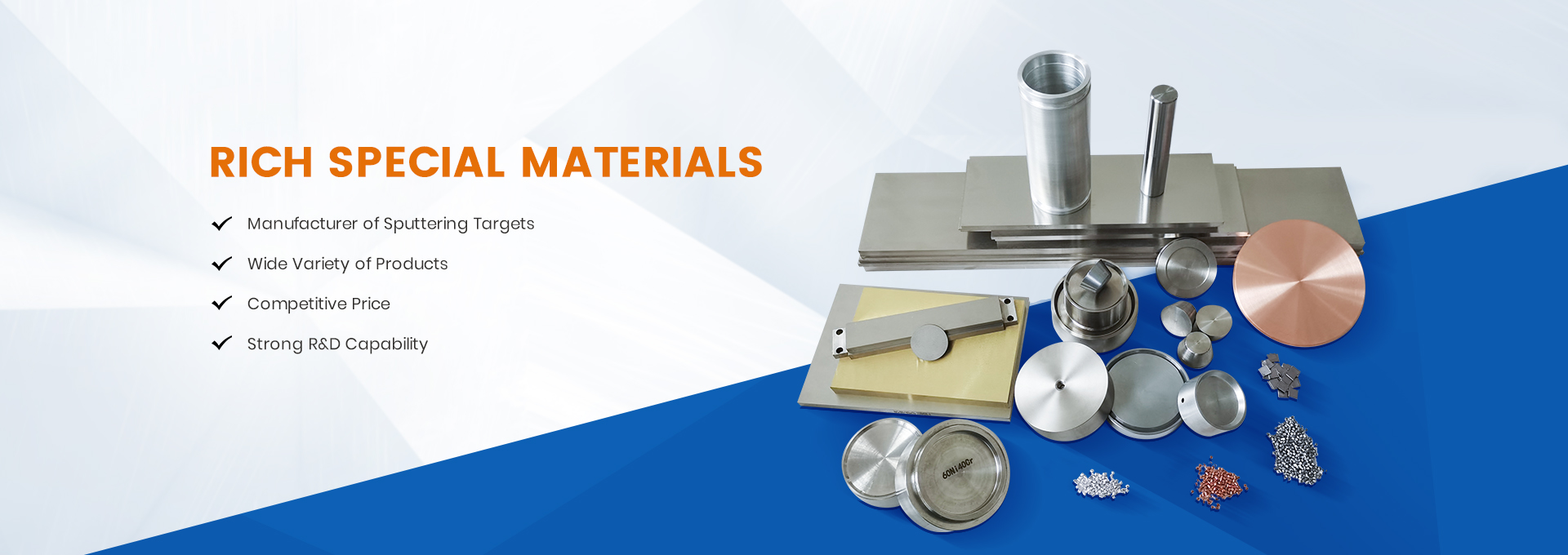




Today, with the rapid development of semiconductor and display technologies, sputtering targets, as the core materials in thin film deposition processes, directly determine the quality of the final product. Among them, the iron-copper alloy sputtering target, with its unique performance advantages, is becoming an indispensable key material in many high-tech fields.
What is an Iron-Copper Alloy Sputtering Target? Why is it so Important?
Iron-copper alloy sputtering targets are circular or rectangular metal products prepared through powder metallurgy or melting processes, primarily used in magnetron sputtering processes. By precisely controlling the ratio of iron to copper, this type of target achieves comprehensive performance that single metals cannot attain.

Core Advantages and Challenges of Iron-Copper Alloy Sputtering Targets
Compared with traditional single-metal sputtering targets, iron-copper alloy sputtering targets offer three outstanding advantages: excellent electrical and thermal conductivity, good mechanical strength, and outstanding corrosion resistance. For example, in display panel manufacturing, it can simultaneously meet both conductivity requirements and long-term usage stability.
Counterintuitively, although iron-copper alloy sputtering targets perform exceptionally well, their production process faces significant challenges. The large difference in melting points between iron (1538°C) and copper (1085°C) causes easy component segregation during the alloying process.
Performance Comparison: Iron-Copper Alloy Sputtering Target vs. Traditional Targets
| Item | Iron-Copper Alloy Sputtering Target | Pure Copper Target |
|---|---|---|
| Conductivity | Excellent | Outstanding |
| Strength | High | Medium |
| Corrosion Resistance | Outstanding | Average |
| Cost | Medium | Low |
Comprehensive Analysis of Iron-Copper Alloy Sputtering Target Production Process
Producing high-quality iron-copper alloy sputtering targets requires a precisely controlled process. Here are the key steps:
Step 1: Raw Material Ratio and Pretreatment. Determine the iron-to-copper ratio based on application requirements, typically ranging from Fe:Cu = 1:9 to 7:3. Raw material purity must reach above 99.95%.
Step 2: Vacuum Melting and Casting. Melting is performed in a vacuum environment to prevent oxidation and ensure uniform alloy composition. This step is crucial for the final product’s density.
Step 3: Thermomechanical Processing. Improve the alloy’s microstructure through processes like hot rolling and forging, eliminating internal defects and increasing target density.
Step 4: Precision Machining and Forming. Process the blank to the customer’s required dimensions and shape, with tolerance control typically within ±0.1mm.
Step 5: Quality Inspection and Packaging. Conduct ultrasonic testing, composition analysis, and grain size measurement to ensure the product meets standards.
⚠ Warning: Many manufacturers skip the vacuum melting step to reduce costs, which leads to pores and inclusions inside the target, significantly affecting the quality and consistency of the sputtered thin film.
Common Misconceptions and Solutions When Selecting Iron-Copper Alloy Sputtering Targets
Misconception 1: Believing all iron-copper alloy sputtering targets have the same performance. In reality, differences in microstructure lead to significant performance variations.
Misconception 2: Overly pursuing low prices. Low-cost targets often have shorter service lives, ultimately increasing overall production costs. According to International Target Association data, the total cost of ownership for high-quality targets is 40% lower than for standard products.
Misconception 3: Neglecting after-sales service. Professional technical support is essential during target usage, making it crucial to choose suppliers with comprehensive technical services.
Future Development Trends of Iron-Copper Alloy Sputtering Targets
As semiconductor technology nodes continue to shrink, performance requirements for iron-copper alloy sputtering targets are increasingly stringent. Future development trends include: higher purity, finer grains, more uniform microstructure, and larger dimensions.
Specifically, processes below 3nm may require iron-copper alloy sputtering targets with grain sizes smaller than 50μm, presenting extreme challenges to preparation technology.
Meanwhile, sustainability requirements are also driving the development of recycling technologies for iron-copper alloy sputtering targets, enabling resource circular utilization.
Checklist for Using Iron-Copper Alloy Sputtering Targets
Confirm the target composition ratio meets application requirements
Check that the target surface is smooth and defect-free
Verify the quality inspection report provided by the supplier
Confirm the bonding quality between the backing plate and target
Check packaging integrity to prevent transportation damage
Develop a reasonable inventory plan to avoid oxidation from long-term storage
In summary, as a key material in high-tech fields, the selection and use of iron-copper alloy sputtering targets require comprehensive consideration of multiple factors. With technological advancements, the performance of this type of target will continue to improve, and its application fields will keep expanding.
Post time: Nov-11-2025