

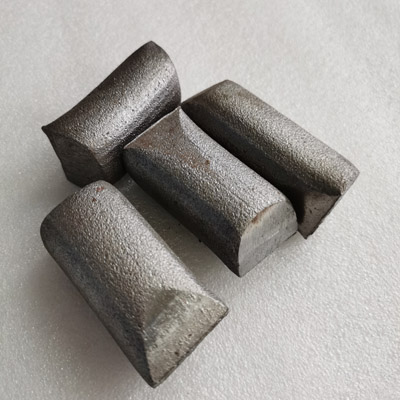
1. Pig Iron
Composition: Contains 2.1%~6.67% carbon, along with impurities like silicon, manganese, sulfur, and phosphorus.
Production: Directly smelted from iron ore in blast furnaces; hard and brittle, unsuitable for forging.
Applications: Primarily used in casting (e.g., engine blocks, sewer pipes, cookware).
2. Steel
Composition: Contains 0.02%~2.1% carbon, with optional alloying elements (e.g., chromium, nickel) to enhance properties.
Production: Refined from pig iron via converters or electric furnaces; combines high strength and plasticity.
Applications: Construction (reinforcement bars), machinery (automotive steel plates), tools (cutlery), and specialty steels (e.g., stainless steel).
3. Wrought Iron
Composition: Contains <0.02% carbon, approaching pure iron; soft and highly ductile.
Production: Decarburized from pig iron (e.g., through puddling).
Applications: Decorative ironwork (railings, gates), historical weapons (e.g., ancient swords).
4. Cast Iron
Types: Gray iron, ductile iron, malleable iron, etc.
Properties: Excellent castability but brittle (except ductile iron, which approaches steel in strength).
Applications: Machine tool bases, municipal manhole covers, automotive brake discs.
Key Features of Industrial Iron:
Mass-produced, cost-effective, and suitable for manufacturing.
Adjustable properties (e.g., carbon content in steel).
Wide-ranging applications in construction, transportation, and machinery.
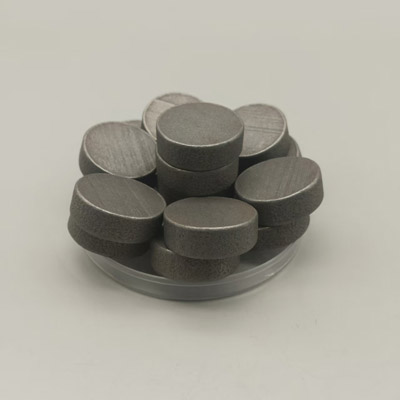
II. Non-Industrial Iron
Non-industrial iron refers to iron materials not used in conventional manufacturing, typically characterized by ultra-high purity or unique origins. They are primarily employed in research, electronics, and advanced technologies.
1. High-Purity Iron (99.9%~99.999%)
Production: Electrolytic refining, zone melting, hydrogen reduction.
Properties: Extremely low impurities (carbon, sulfur, phosphorus at ppm levels); magnetic and electrical conductivity near theoretical limits.
Applications:Scientific research (magnetic materials, superconductor substrates).
Electronics (precision magnetic cores, vacuum tube components).
Nuclear industry (neutron-absorbing materials).
2. Meteoric Iron
Origin: Natural iron-nickel alloy from meteorites (5%~30% nickel).
Properties: Requires no smelting; historically used for weapons (e.g., King Tutankhamun’s dagger).
Modern Uses: Planetary geology research, collectibles.
3. Electrolytic Iron
Production: Electrolysis of ferrous sulfate solutions; purity ≥99.9%.
Applications: Laboratory reagents, medical supplements (iron fortification), food additives.
Key Features of Non-Industrial Iron:
High purity or exotic sources, unsuitable for general industry.
Small-scale production, high cost.
Used in high-tech, research, or niche fields.
III. Industrial vs. Non-Industrial Iron: Key Comparisons
| Feature | Industrial Iron | Non-Industrial Iron |
|---|---|---|
| Purity | ≤99.5% (with impurities) | ≥99.9% (ultra-high purity) |
| Production Scale | Mass-produced (tonnes) | Small batches (grams/kilos) |
| Cost | Low | Very high |
| Primary Uses | Construction, manufacturing | Research, electronics, nuclear tech |
| Examples | Steel, pig iron, wrought iron | High-purity iron, meteoric iron, electrolytic iron |
IV. Why Distinguish Between the Two?
1.Different Applications:
Industrial iron meets everyday needs (e.g., buildings, vehicles).
Non-industrial iron serves cutting-edge tech (e.g., semiconductors).
2.Performance Requirements:
Industrial iron prioritizes strength, cost, and workability.
Non-industrial iron demands purity, electromagnetic properties, and chemical stability.
3.Supply Chain Differences:Industrial iron is globally traded and standardized.
Non-industrial iron is customized and relies on specialized processes.
V. Future Trends
Industrial Iron: Advances in high-performance steels (e.g., lightweight automotive steel) and green steelmaking (hydrogen reduction). Non-Industrial Iron: Growing demand from high-tech sectors (e.g., semiconductors).
The fundamental distinction between industrial and non-industrial iron lies in purity, purpose, and production logic.
For buildings or vehicles, choose industrial iron (e.g., steel).
For quantum materials or nuclear research, opt for high-purity iron.
Understanding this classification ensures precise material selection in engineering, procurement, and research.
Post time: Sep-09-2025