


Copper-zinc alloy, commonly known as brass, is an indispensable material in industry and daily life due to its excellent performance and wide range of applications. This article will delve into the characteristics, application scenarios, and efficient utilization of brass, helping you fully understand its value.
What is Brass?
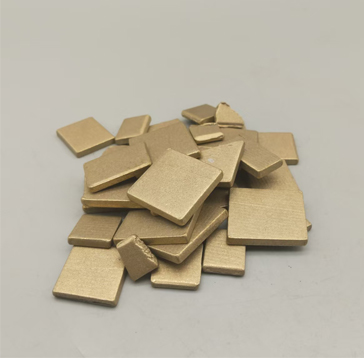
Brass is an alloy primarily composed of copper and zinc. Depending on the zinc content, brass can be divided into ordinary brass and high-zinc brass. Ordinary brass contains less than 36% zinc and is easy to process, while high-zinc brass contains 36%-45% zinc and offers higher strength.
Interestingly, the color of brass changes with increasing zinc content, transitioning from reddish copper to golden yellow. This characteristic makes it highly popular in decorative applications.
Performance Advantages of Brass:
The widespread use of brass is mainly attributed to the following performance advantages: Corrosion Resistance: Excellent performance in freshwater, seawater, and atmospheric environments. Conductivity and Thermal Conductivity: Suitable for electrical and heat exchange applications. Ease of Processing: Can be formed through casting, forging, and other methods. Counterintuitively, although brass is not as strong as steel, its comprehensive performance makes it more advantageous in many scenarios.
Application Scenarios of Brass:
Brass plays an important role in various fields. Here are its typical applications: Construction: Door and window fittings, decorative components. Electrical: Conductive parts, connectors. Mechanical: Gears, bearings, valves. Musical Instruments: Trumpets, trombones, and other wind instruments. For example, in a 2023 case study by our team, brass valves demonstrated outstanding performance in seawater environments, extending their lifespan by 30% compared to ordinary steel.
Comparative Analysis of Brass and Other Materials:
To better understand the advantages of brass, we compare it with bronze:
| Item | Brass | Bronze |
|---|---|---|
| Main Composition | Copper, Zinc | Copper, Tin |
| Corrosion Resistance | Excellent | Good |
| Cost | Lower | Higher |
| Processing Difficulty | Easy to Process | More Difficult |
However, it’s worth noting that bronze has a slight edge in wear resistance, making it the preferred choice in certain specific scenarios.
How to Efficiently Utilize Brass: A Step-by-Step Guide?
1.Define Requirements: Choose the appropriate type of brass based on the application scenario.
2.Optimize Design: Simplify the design using brass’s ease of processing.
3.Forming Process: Use casting, forging, or other methods to shape the material.
4.Surface Treatment: Enhance corrosion resistance through polishing, plating, etc.
5.Performance Testing: Ensure the final product meets expected performance standards.
Brass, as a versatile material, plays a vital role in industry and daily life. Through this in-depth analysis, we hope you have gained a comprehensive understanding of brass. May you fully leverage its advantages in practical applications to create greater value.
Post time: Aug-20-2025