

Boron silicon carbide (B₄Si) is an inorganic compound composed of boron (B) and silicon (Si) elements, belonging to the category of high-performance ceramic materials. Its unique crystal structure and excellent physical and chemical properties make it an ideal choice for Boron Silicon Carbide Ceramic Targets. This article will delve into its characteristics, application scenarios, preparation methods, and share practical cases and operation guidelines.
What is Boron Silicon Carbide?
Boron silicon carbide (chemical formula: B₄Si) is a stable compound composed of 4 boron atoms and 1 silicon atom, characterized by high hardness, high melting point, and excellent chemical stability. Its crystal structure typically exists in cubic or hexagonal systems.
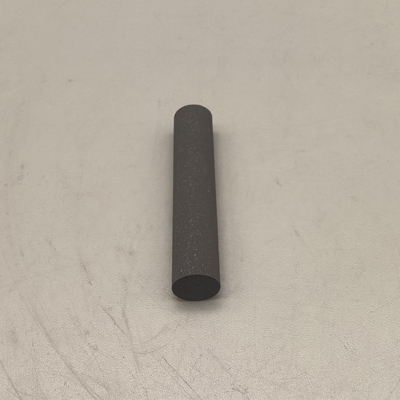
What are the preparation Methods of Boron Silicon Carbide Rods?
1. Raw Material Preparation
Select high-purity boron and silicon powders, ensuring impurity content is below 0.1%.
2. Mixing and Pressing
Mix the powders uniformly and shape them through cold pressing.
3. High-Temperature Sintering
Heat the pressed坯体 in an inert gas environment to above 1800°C for sintering.
4. Processing and Shaping
Use diamond tools to precisely machine the sintered rods.
5. Quality Testing
Ensure the quality of the rods meets standards through X-ray diffraction (XRD) and density tests.
What are the Advantages of Boron Silicon Carbide (B₄Si)?
1.High Hardness:
Comparable to silicon carbide (SiC), making it suitable for wear-resistant applications such as cutting tools, abrasives, and protective coatings.
2.High Melting Point:
Approximately 2000°C, enabling it to perform reliably in high-temperature environments like aerospace components and industrial furnaces.
3.Low Density:
About 2.52 g/cm³ [1], which is ideal for lightweight design in applications where weight reduction is critical, such as in aerospace and automotive industries.
4.Chemical Stability:
Resistant to acids, alkalis, and oxidation, making it suitable for use in corrosive environments, such as chemical processing equipment and nuclear reactors.
What are the application scenarios of SiB4 Ceramic targets?
Semiconductor Industry
In the semiconductor field, [Boron Silicon Carbide Ceramic Targets] are used to deposit high-hardness films as insulating or protective layers. For example, they can effectively enhance the high-temperature resistance of devices.
Optical Coatings
The high refractive index of boron silicon carbide makes it an ideal material for optical films. For instance, in lens coatings, it significantly improves light reflection efficiency.
Wear-Resistant Coatings and High-Temperature Protection
In the aerospace industry, [Boron Silicon Carbide Ceramic Targets] are used for high-temperature protective coatings, significantly improving the wear and corrosion resistance of components.
Semiconductor Industry
In the semiconductor field, [Boron Silicon Carbide Ceramic Targets] are used to deposit high-hardness films as insulating or protective layers. For example, they can effectively enhance the high-temperature resistance of devices.
Comparative Analysis: Boron Silicon Carbide vs. Silicon Carbide:
| Characteristics | Boron Silicon Carbide (B₄Si) | Silicon Carbide (SiC) |
|---|---|---|
| Hardness | High | High |
| Melting Point | 2000°C | 2700°C |
| Chemical Stability | Excellent | Excellent |
| Cost | Higher | Lower |
Boron Silicon Carbide Ceramic Targets have become an important material in the industrial field due to their excellent performance and broad application prospects. Through scientific preparation methods and strict quality control, we can fully leverage their potential to drive technological innovation.
Post time: Jun-24-2025