





Sputtering targets are key source materials used in physical vapor deposition techniques such as magnetron sputtering to prepare functional thin films. Traditional targets are mainly based on pure metals or binary and ternary alloy systems with a single principal element, and their performance optimization space has gradually approached limits over long-term development. Entering the 21st century, a brand-new alloy design concept—high-entropy alloys (HEAs)—has opened up a new frontier for materials science. Distinct from the conventional approach that uses one or two principal elements with minor additions of other elements for optimization, HEAs are composed of five or more principal elements mixed in near-equiatomic ratios, with each element having a mole fraction between 5% and 35%. This unique compositional design endows the alloy with a very high mixing entropy, which favors the formation of simple solid solution structures rather than complex intermetallic compounds, thereby granting the material a series of outstanding comprehensive properties.
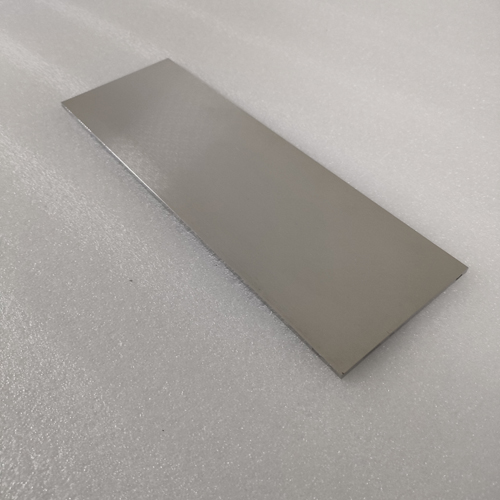
The iron-manganese-cobalt-chromium (FeMnCoCr) alloy is a typical representative of this design concept. This alloy uses four transition metal elements—iron (Fe), manganese (Mn), cobalt (Co), and chromium (Cr)—as its principal components, forming a multi-principal-element solid solution under equiatomic or near-equiatomic conditions. As a sputtering target, the FeMnCoCr alloy can be used to prepare thin films via magnetron sputtering, extending the excellent properties exhibited by HEAs in bulk form to thin film morphology, showing broad application prospects in fields such as hard coatings, wear-resistant protection, corrosion-resistant layers, and high-temperature structural coatings.
2. Composition Design and High-Entropy Principles
2.1 Quaternary Principal Element Configuration
FeMnCoCr alloy targets use iron, manganese, cobalt, and chromium as the principal elements. The theoretically optimal atomic ratio is an equimolar configuration (Fe:Mn:Co:Cr = 1:1:1:1 at%). All four elements are transition metals, located adjacently in the periodic table, with similar atomic radii and good mutual solubility, which provides favorable thermodynamic conditions for forming a single solid solution structure. In practical applications, manufacturers typically offer customizable composition ratios, allowing users to flexibly adjust the proportions of each element according to the performance requirements of specific application scenarios.
In terms of purity control, high-purity FeMnCoCr alloy targets use electronic-grade high-purity metal raw materials, requiring that the purity of each metal be no less than 99.99%. Strict limits are imposed on interstitial impurity content—oxygen content below 50 ppm, carbon below 20 ppm, and nitrogen below 15 ppm. Additionally, the target’s relative density must reach above 99.95%, and grain boundary purity above 99.9%, to ensure stable discharge during sputtering and obtain high-quality functional thin films.
2.2 The Four Pillars of High-Entropy Effects
The reason why FeMnCoCr HEAs can surpass traditional alloys in multiple properties lies in the synergistic action of their “four core effects”.
High mixing entropy effect: When the four principal elements are mixed in near-equimolar ratios, the configurational entropy of the system increases significantly. Taking an equiatomic quaternary alloy as an example, its theoretical mixing entropy is much higher than that of traditional alloys. High mixing entropy helps suppress the formation of brittle intermetallic compounds and promotes the stabilization of simple solid solution structures, which is the foundation for microstructural control.
Sluggish diffusion effect: In multi-principal-element alloy systems, differences in atomic sizes and chemical properties among different elements create a complex potential energy landscape in the crystal lattice. Atomic migration in the lattice requires overcoming higher energy barriers, and the overall diffusion rate is thus significantly lower than that in traditional alloys. This effect endows the material with excellent thermal stability—microstructural changes and grain coarsening are difficult to occur even at high temperatures—allowing it to maintain mechanical performance stability under high-temperature service environments.
Lattice distortion effect: The atomic radii of the four elements differ. When they randomly occupy lattice sites, severe local lattice distortion occurs. This distortion not only increases resistance to dislocation motion, thereby significantly enhancing the hardness and strength of the material, but also captures defects through the distorted regions, promotes self-repair of radiation damage, and tunes the electronic band structure to synergistically optimize corrosion resistance and radiation resistance.
Cocktail effect: The cocktail effect refers to the multi-principal-element alloy integrating the characteristics of each constituent element and producing comprehensive properties that cannot be achieved by any single element through synergistic interactions among the principal elements. In the FeMnCoCr alloy, iron and cobalt contribute high strength and certain magnetic characteristics, manganese improves the work-hardening ability, and chromium provides excellent corrosion resistance and oxidation resistance. The synergy of the four elements leads to comprehensive optimization of thin film hardness, wear resistance, and corrosion resistance.
2.3 Magnetic Characteristics and Sputtering Process Considerations
Iron and cobalt are typical ferromagnetic elements, chromium is an antiferromagnetic element, and manganese is paramagnetic at room temperature. As a multi-principal-element solid solution, the FeMnCoCr alloy exhibits relatively complex magnetic behavior due to the superposition of the magnetic characteristics of the four elements and generally remains significantly ferromagnetic. Therefore, this alloy target also faces the unique magnetic shielding effect associated with ferromagnetic sputtering targets during magnetron sputtering—the magnetic permeability of the target diverts part of the magnetic field generated by the magnetron system, reducing the effective magnetic flux density on the target surface, which affects normal ignition and sputtering stability. In practical sputtering processes, this technical bottleneck is typically addressed by optimizing target thickness (generally not exceeding 2 mm), employing grooved target surface designs, or enhancing the magnetic field strength of the magnetron cathode.
3. Preparation Process and Quality Control
3.1 Melting and Casting Processes
The preparation of FeMnCoCr HEA targets mainly adopts the melting and casting route. Common melting methods include vacuum arc melting, vacuum induction levitation melting, and vacuum induction melting.
Vacuum arc melting is suitable for small-scale target preparation (50 g to 200 g). The mixed metal raw materials are rapidly melted by the high temperature of the electric arc and solidified in a water-cooled copper mold. The advantages of this method include fast heating rate, high melt superheat, and high cooling rate, which favor obtaining compositionally uniform castings with fine microstructures. The temperature of the arc melting furnace can reach 3000°C, sufficient to melt metal elements with relatively high melting points, ensuring uniform mixing of the four metal raw materials in the molten state.
For the preparation of larger-size targets (5 kg to 50 kg), vacuum induction levitation melting is more favored. This technique uses electromagnetic force to keep the metal melt suspended in the crucible, avoiding contact between the melt and crucible material, thereby effectively preventing contamination by external impurities and producing high-purity (≥99.9%) alloy targets.
3.2 Powder Metallurgy Assisted Route
In the field of powder metallurgy, patents already exist for the preparation of multi-principal-element targets containing Fe, Al, Co, Cu, Cr, Mn, etc. This technique uses pure metal blocks with purity greater than 99.9%, mixed according to equimolar ratio (equal atomic ratio), melted in a non-consumable vacuum melting furnace, followed by powdering, powder sintering, and hot isostatic pressing (HIP) treatment, finally obtaining alloy targets with high density and uniform composition. The powder metallurgy route is particularly suitable for composition systems where uniform microstructure is difficult to achieve by direct melting, or when special microstructures are required for the target.
On high-end applications, the preparation of Fe-Co-Ni-Cr-Mn quinary HEA targets employs an advanced “mechanical alloying + ultra-high pressure HIP” technical route. In this process, electronic-grade metal powders (purity ≥99.99%) are thoroughly mixed by mechanical alloying and then subjected to HIP sintering under ultra-high pressure of 200 MPa. This yields fully dense targets with a relative density exceeding 99.95%, grain sizes reaching sub-nanometer local ordering, and lattice distortion exceeding 8%. Although this technical route is primarily aimed at quinary systems containing nickel, it also provides important references for the high-end preparation of quaternary FeMnCoCr targets.
3.3 Subsequent Forming and Machining
The ingots obtained by melting or the billets obtained by sintering need to undergo a series of thermomechanical processing steps to become finished targets. This process mainly includes: refining grains and eliminating casting defects through forging and rolling, relieving processing stress and further homogenizing the material through heat treatment, and finally obtaining dimensions and shapes suitable for sputtering equipment installation through precision machining (turning, milling, grinding, etc.). For large-size or complex-shaped targets, a backing plate bonding step is also required, where the alloy target is welded or brazed to a backing plate material such as oxygen-free copper to enhance the mechanical strength and thermal conductivity of the target.
The FeMnCoCr sputtering target, as a novel material designed using the high-entropy alloy concept, breaks through the traditional composition design model based on a single principal element by forming a multi-principal-element solid solution through a near-equiatomic configuration of four principal elements. The synergistic effects of high mixing entropy, sluggish diffusion, lattice distortion, and the cocktail effect give FeMnCoCr alloy thin films superior comprehensive properties in hardness, wear resistance, corrosion resistance, and high-temperature stability compared to traditional alloys.
Post time: Apr-25-2026