


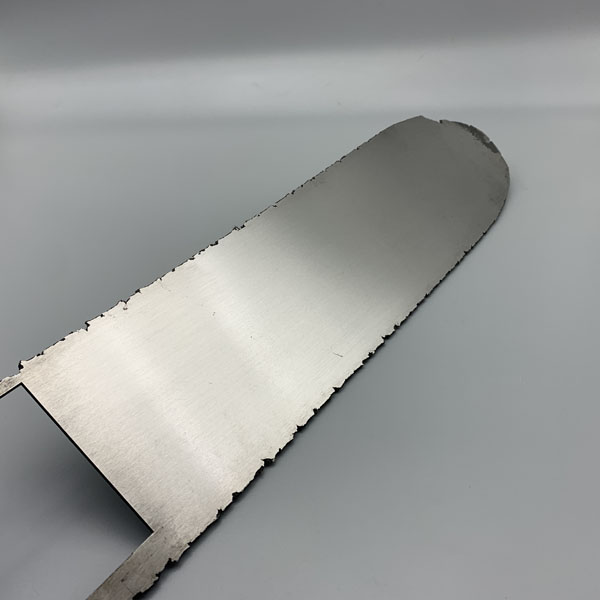
Expansion alloy is a kind of alloy with special thermal expansion properties. In a certain temperature range, Dilatant alloy materials coefficient of thermal expansion (CTE) either remains extremely low (low expansion alloys), or can match the coefficient of thermal expansion of other materials (such as glass, ceramics, etc.) (constant expansion alloys). Thermal expansion alloys can effectively control their own dimensional changes when the temperature changes, thus meeting a variety of high precision and other applications.
| Composition |
Fe |
Ni |
Mn |
C |
Si |
P |
S |
| Min |
Balance |
35 |
0.2 |
- |
- |
- |
- |
| Max |
37 |
0.6 |
0.05 |
0.3 |
0.02 |
0.02 |
The controlled – expansion alloys such as Kovar alloy (4J29), also know as Kovar, FeNi28Co18. kovar alloy coefficient of thermal expansion can be similar to that of materials such as glass and ceramics within a certain temperature range. This is achieved by adjusting the chemical composition of the alloy (mainly including elements such as iron, nickel, and cobalt). In the electronics industry, Kovar alloy is used to make the sealing components of electronic tubes, transistors and other electronic components with glass or ceramics. Characteristics: The controlled – expansion iron – nickel – cobalt alloy for glass – to – metal seals, Kovar alloy, has an expansion coefficient similar to that of hard glass within a certain temperature range.The controlled expansion alloys is used for matched sealing with hard glass in the vacuum industry. There are also other materials of controlled – expansion alloys such as 4J42 and 4J50 (FeNi 50) etc.
Kovar Chemical Element content (%):
|
Composition |
Fe |
Ni |
Co |
C |
Si |
Mn |
P |
S |
Cr |
Cu |
Mo |
|
Min |
Balance |
28.5 |
16.8 |
- |
- |
- |
- |
- |
- |
- |
- |
|
Max |
29.5 |
17.8 |
0.03 |
0.3 |
0.5 |
0.02 |
0.02 |
0.2 |
0.2 |
0.2 |
Post time: Jan-16-2025