


In modern advanced manufacturing, copper (Cu) and its alloy targets are among the most widely used metal targets in physical vapor deposition (PVD) technology. Due to their excellent electrical conductivity, thermal conductivity, ductility, and low resistivity, copper targets have become the core choice for interconnect materials in large-scale integrated circuits and represent the highest-volume metal target category in the electronic information industry. From nanometer-scale copper interconnects inside chips, to large-area transparent electrodes in flat panel displays, and to magnetic thin films in hard disk heads, copper-based targets run through multiple critical manufacturing chains of the modern electronics industry.
I. Product Series of Copper and Copper Alloy Targets
Based on material composition, purity grade, and geometric form, copper targets have developed into a comprehensive product system to meet the technical requirements of diverse application scenarios.
(I) Classification by Material Composition
High-Purity Copper Targets
High-purity copper targets are the most fundamental variety in the copper target system, typically requiring a purity of 4N (99.99%) or above, with high-end applications demanding 6N (99.9999%) or even higher. There is a clear gradient in purity requirements across different industries: integrated circuit wafer fabrication requires copper target purity ≥6N with grain size controlled below 50 μm; the information storage industry (hard disk heads, magneto-optical disks) requires purity ≥5N; and the flat panel display industry requires purity ≥4N. Ultra-large-scale integrated circuit chip manufacturing has the most stringent metal purity requirements, typically demanding 99.9999% (6N) or above.
Copper Alloy Targets
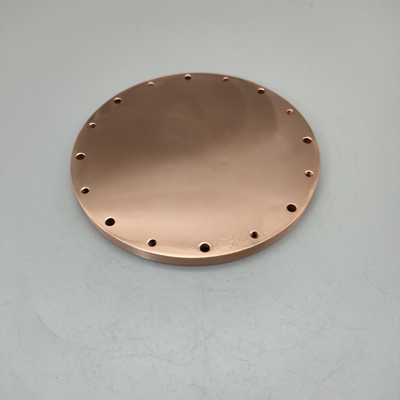
Copper alloy targets are high-purity alloy targets made by adding one or more metal elements with a mass fraction of less than 10% to high-purity copper (typically 4N or above). Compared with high-purity copper targets, copper alloy targets offer advantages such as more uniform particle size distribution, more easily controlled grain size and orientation, higher structural strength, and lower electromigration rates. Major product series include:
Copper-Manganese Alloy Targets (Cu-Mn) : This is currently one of the copper alloy target varieties with the highest technical barriers. Adding a small amount of manganese (typically less than 1% by mass) to high-purity copper can significantly improve the electromigration resistance and interface stability of copper interconnects.

Copper-Aluminum Alloy Targets (Cu-Al) : Copper-aluminum alloy targets are another important category of copper-based alloy targets, offering higher hardness and good corrosion resistance. They are used in PVD coating processes for contact layers and barrier layers in integrated circuit manufacturing. Copper-aluminum alloy targets also have important applications in the fabrication of TFT electrodes for flat panel displays.
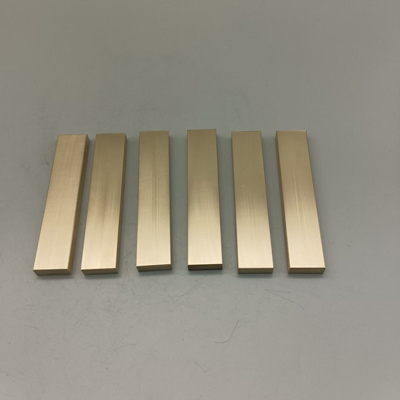
Other Copper Alloy Targets: These include copper-tin alloys, copper-calcium alloys, copper-silver alloys, and others. Patent literature shows that alloying elements that can be added to copper alloy targets cover a wide range of elements including Mg, Al, Ag, Ti, Zr, Mn, Ca, Cr, Sn, Ni, Zn, Co, and P.
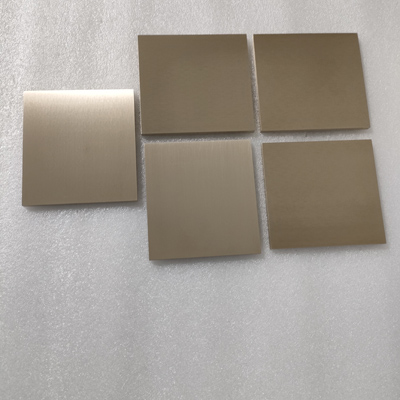
(II) Classification by Geometric Form
Planar Targets: The most common circular disc or rectangular flat form. Circular disc targets are often used in integrated circuit manufacturing, while rectangular targets are mostly used in large display panels for preparing transparent conductive films.
Cylindrical/Rotary Targets: Tubular in shape, these targets rotate during sputtering, offering higher material utilization and more stable sputtering performance.
(III) Classification by Purity and Application Grade
Semiconductor Grade (purity ≥6N) : Used in integrated circuit copper interconnect processes, requiring grain size <50 μm, extremely low impurity content, and the most stringent thin film resistivity and electromigration performance requirements.
High-End Display/Storage Grade (purity ≥5N) : Used in flat panel display TFT electrodes, hard disk heads, magneto-optical disks, etc., with high requirements for purity and grain orientation.
Industrial Grade (purity ≥4N) : Used in ordinary electronic components, decorative coatings, and other fields with relatively less stringent purity requirements.
II. Diverse Application Fields
(I) Integrated Circuits and Semiconductor Manufacturing
This is the application field with the highest technical barriers and greatest added value for copper targets. In the copper interconnect process of ultra-large-scale integrated circuits, copper targets are used to deposit barrier layers, seed layers, and interconnect lines. Copper and copper alloys as conductive layers are typically used in advanced chips at technology nodes from 90 nm to 3 nm. The core products of Youyan Yijin cover ultra-high-purity copper and copper alloy targets, copper-phosphorus anodes, and others, which are batch-applied in integrated circuit logic chips, memory chips, high-end filters, high-power devices, and advanced packaging.
(II) Flat Panel Display and Optoelectronics
Copper targets are used in the flat panel display industry to manufacture electrode layers of thin-film transistors (TFTs), including reflective layers, transparent electrodes, emitters, and cathodes. Due to the high conductivity of copper, copper electrodes are becoming the preferred solution for large-size, high-resolution TFT-LCD televisions. Copper-aluminum alloy targets have considerable application prospects in the fabrication of TFT electrodes for OLED and Mini-LED displays.
(III) Information Storage
In the information storage industry, copper targets are used to manufacture magnetic thin films for hard disk heads and reflective layers and recording layers for magneto-optical phase-change disks, generally requiring purity of 5N or above.
(IV) Electronic Components and Packaging
Copper and copper alloy targets are also widely used in the manufacture of internal electrode thin films for passive components such as resistors and capacitors, as well as metallization processes for advanced packaging substrates. Copper-phosphorus anode materials are also important supporting consumables in copper electroplating processes.
Conclusion
Copper and copper alloy sputtering targets are among the metal target categories with the largest consumption and highest technological maturity in the electronic information industry. Their product system has evolved from a single pure copper target to a complete series covering multiple alloy compositions such as copper-manganese, copper-aluminum, and copper-tin, multiple geometric forms, and multiple purity grades. Our company can provide customized products according to requirements.
Post time: Sep-14-2026