



One Artificial Hip Joint, Two Hundred Million Movements – And You Definitely Don’t Want It to “Grind Into Dust” or “Rust” Inside Your Body
It can not only stay stable in the human body for decades, but also hold its ground near thousand-degree heat in an aircraft engine. This sounds like material requirements from a sci-fi novel – but in reality, it exists: Cobalt-Chromium-Molybdenum (CoCrMo) Alloy.
Core Elements: Three Elements, Each with Its Own Role
- Cobalt (Co) – Matrix element, approx. 60–70%. It is heat-resistant and tough, like the rebar in concrete, supporting the entire material framework.
- Chromium (Cr) – Approx. 25–30%. Chromium naturally forms an extremely thin chromium oxide (Cr₂O₃) film on the alloy surface. How remarkable is this layer? It is denser and more stable than the oxide film on stainless steel. Simply put, chromium gives the alloy an “invisible ceramic rust-proof coat.”
- Molybdenum (Mo) – Approx. 5–7%. Molybdenum acts as a “micro-refiner” – it makes the internal grain structure finer and more uniform, while improving strength and corrosion resistance. If CoCrMo alloy were chocolate, molybdenum would be the ingredient that makes it smoother and tougher.
In addition to these three main elements, a small amount of carbon (about 0.1–0.3%) is added, forming carbide hard particles with chromium and molybdenum, evenly distributed in the alloy. This structure has a vivid name: ”soft matrix + hard particles” – like concrete embedded with gravel: the gravel resists wear, while the concrete bears the load.
In short, the secret of this alloy lies in its name:
Cobalt = skeleton | Chromium = armor | Molybdenum = enhancer
At a Glance: Common Grades of CoCrMo Alloy
| Grade | Designation System | Key Feature | Applications |
|---|---|---|---|
| Stellite 21 | International (Stellite) | Classic CoCrMo, tungsten-free | Artificial joints, industrial valves |
| Stellite 6 | International (Stellite) | Contains tungsten, more wear-resistant | Engine valves, high-temperature seals |
| Stellite 25 | International (Stellite) | Contains nickel & tungsten, good high-temp strength | Gas turbines, die casting molds |
| ISO 5832-12 | Surgical implant standard | Wrought cobalt-chromium-molybdenum alloy | Hip/knee implant stems |
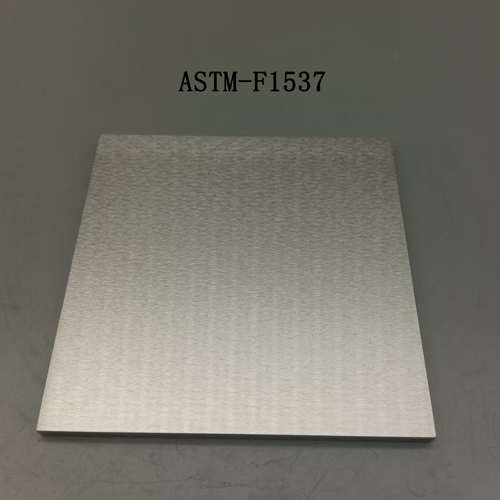
| ASTM F1537 | Surgical implant standard | Wrought alloy, excellent mechanical properties | Global orthopedic material standard |
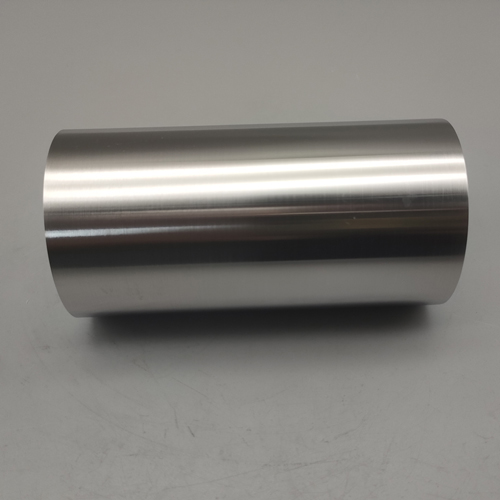
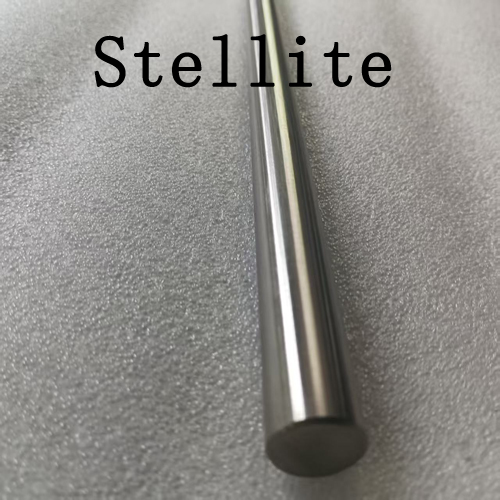
CoCrMo Alloy Properties
1. Wear Resistance
This is the most “hardcore” capability of CoCrMo alloy. In an artificial joint, the metal femoral head rubs against the polyethylene liner millions of times per year – up to a hundred million cycles over the implant’s lifetime. Under such conditions, ordinary metals produce wear particles that can trigger an immune response, leading to bone resorption and implant loosening.
CoCrMo alloy, however, has a wear rate 10 times lower than stainless steel.
Why so wear-resistant? The answer lies in the soft matrix + hard particles structure: the soft cobalt matrix absorbs impact energy, while the hard carbide particles act like countless tiny shields against friction and scratching.
2. Corrosion Resistance
Most metals inside the human body slowly “sacrifice” themselves – releasing metal ions. CoCrMo alloy is different. Once its chromium oxide film forms, it self-repairs within a very short time even if scratched. Tests show that medical-grade CoCrMo alloy has a corrosion rate of less than 0.01 mm per year in simulated body fluid.
That means: a 5‑mm-thick joint component could theoretically last 500 years in the human body – far beyond a human lifespan.
Where Is It Used?
1. Possibly in Your Own Body
More than 3 million hip and knee replacement surgeries are performed globally each year. A large proportion of those implants – especially femoral stems and heads – are made from CoCrMo alloy.
Why do surgeons and patients choose it? Because its elastic modulus sits between stainless steel and ceramic – providing adequate rigidity without causing bone atrophy due to excessive stiffness. Simply put: it doesn’t upset the bone.
2. Inside the Heart of an Aircraft
Temperatures near an aircraft engine combustion chamber can exceed 1000°C. CoCrMo alloy maintains its strength and oxidation resistance up to 600°C. Notice the span: this material fears neither the gentle 37°C environment inside the human body nor the brutal heat inside a jet engine – a rare crossover.
In aircraft, CoCrMo alloy appears as thin sheets or precision castings in combustor liners, turbine blade seals, valves, and more. It’s the unsung hero.
Why Isn’t It Easy to Use?
This material has one unavoidable drawback: it is very difficult to machine.
CoCrMo alloy work-hardens aggressively – the more you cut it, the harder the surface becomes, until it can even dull the cutting tool. As a result, most CoCrMo alloy components are made by vacuum precision casting: pouring molten metal into a mold to near‑net shape, minimizing subsequent machining.
Another method: hot forging. Large load‑bearing parts like artificial hip stems are often repeatedly forged at high temperatures.
In recent years, 3D printing (additive manufacturing) has also started being used for CoCrMo alloy – especially for complex, patient‑specific implants.
A Short Story: From Dental Material to Aerospace Alloy
Many people don’t know that the first large‑scale application of CoCrMo alloy was not in hips or aircraft – but in false teeth.
In the early 20th century, cobalt‑chromium alloys were found to be cheaper and more wear‑resistant than gold alloys for dental crowns and bridges. Later, molybdenum was added to further improve strength and corrosion resistance – giving birth to today’s CoCrMo alloy.
Then orthopedic surgeons discovered it: this man‑made material performed remarkably well inside the human body. Today, you can find CoCrMo alloy described in the same literature as a dental casting alloy, a standard orthopedic material, and an optional alloy for aircraft engines.
Spanning oral medicine, orthopedics, and aerospace – such cross‑domain ability is very rare among metals.
Frequently Asked Questions (FAQ)
Q1: Does CoCrMo alloy contain cobalt? Is it safe for the human body?
A: Yes, it is safe. Cobalt in the alloy exists in a stable metallic bonded form, not as free cobalt ions. Under normal use, the ion release rate from CoCrMo alloy is extremely low – far below human safety thresholds. It has been used in artificial joints and dental implants for decades with proven safety.
Q2: Which is better – CoCrMo alloy or titanium alloy?
A: Neither is absolutely “better” – it depends on the application.
- Wear resistance: CoCrMo > Titanium
- Density (lightweight): Titanium > CoCrMo
- Biocompatibility: both are excellent.
Typically, femoral heads (which require wear resistance) use CoCrMo, while bone plates and screws (which need to be light and elastically matched) use titanium.
Q3: Can medical-grade CoCrMo alloy be sourced in China?
A: Yes. Domestic artificial joints also widely use domestic or imported CoCrMo materials. For example, Beijing Rui Chi High-Tech Co., Ltd. produces CoCrMo alloys widely used in high‑temperature, corrosion‑resistant, and wear‑resistant industrial applications as well as medical fields – well received by customers.
Q4: Is this material expensive?
A: More expensive than stainless steel, roughly comparable to or slightly cheaper than titanium alloy. The exact price depends on grade, form (bar/wire/powder), and processing. Medical grade > industrial grade; wrought > cast.
Post time: May-18-2026