


Chromium‑aluminum alloy sputtering targets (commonly referred to as CrAl targets or AlCr targets) are high‑performance alloy sputtering source materials widely used in physical vapor deposition (PVD) processes. Through magnetron sputtering or arc evaporation, these targets deposit functional films onto the surfaces of tools, dies, and mechanical components, significantly enhancing the wear resistance, oxidation resistance, and service life of the substrate materials. In recent years, as advanced manufacturing moves toward higher speeds, elevated temperatures, and extended lifetimes, CrAl targets have become one of the key sputtering targets extensively adopted in industry, following the earlier success of TiAl targets.
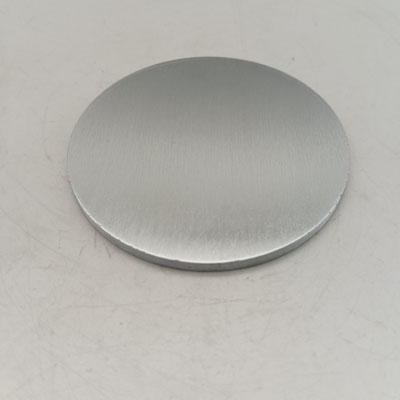
Product Composition
Chromium‑aluminum alloy targets consist of two primary elements: chromium (Cr) and aluminum (Al). The composition ratio can be tailored over a wide range to meet specific application requirements. Chromium has a melting point of 1863 °C, while aluminum melts at 655 °C, representing a difference of approximately 1208 °C between the two metals.
Typical composition ratios:
Common CrAl target compositions (in atomic percent) include the following:
| Composition (at%) | Density (g/cm³) | Typical Purity |
|---|---|---|
| Cr₅₀Al₅₀ | ≥4.55 | ≥99.7% |
| Cr₇₀Al₃₀ | ≥3.70 | ≥99.7% |
| Cr₃₀Al₇₀ | ≥3.73 | ≥99.7% |
In addition to these standard ratios, CrAl targets can be custom‑manufactured over a broad aluminum content range of 10 at% to 90 at%. Furthermore, quaternary alloy targets of the Cr‑Al‑X type (where X = Si, Ti, Y, B, V, etc.) can be produced by doping with a fourth element to meet specific performance requirements.
Purity requirements:
Industrial‑grade CrAl targets typically achieve a purity of ≥99.7 %, while high‑end applications may require ≥99.9 % or even ≥99.99 %. The total content of metallic impurities (such as Fe, Si, Cu, Mn, etc.) is generally controlled to within 2000 ppm, and non‑metallic impurities like oxygen and nitrogen are also strictly limited.
3. Production Methods
The physical and chemical properties of chromium and aluminum differ drastically – chromium melts at 1863 °C while aluminum melts at only 655 °C, a difference of more than 1200 °C. Conventional melting and casting methods are unable to handle both metals simultaneously. Moreover, in the molten state, chromium and aluminum undergo vigorous metallurgical reactions, forming multiple intermetallic compounds with varying compositions, which lead to inhomogeneous alloy distribution and fail to meet the stringent compositional uniformity requirements for sputtering targets. Consequently, the production of CrAl targets relies predominantly on powder metallurgy techniques.
3.1 Powder Metallurgy (PM) Method
Powder metallurgy is the most widely adopted route for CrAl target fabrication. The core process steps are as follows:
(1) Raw material preparation and mixing: High‑purity (≥99.5 wt%) chromium powder and aluminum powder are weighed according to the target composition ratio and then blended in a V‑type mixer. To ensure uniform mixing, the process is typically carried out under vacuum or inert‑gas protection for several hours.
(2) Cold Isostatic Pressing (CIP): The mixed powder is loaded into a CIP mould, vacuum‑sealed, and pressed under a pressure of 100–400 MPa to obtain a green compact with sufficient mechanical strength.
(3) Hot Isostatic Pressing (HIP): The green compact is placed in a steel can, vacuum‑degassed, and then sintered under high temperature and high isostatic pressure. The HIP process simultaneously applies heat and isostatic pressure, effectively eliminating pores between powder particles and yielding a highly dense target approaching theoretical density.
(4) Machining: The sintered ingot is cut, ground, and machined into finished targets of required dimensions and shapes.
3.2 Other Preparation Methods
In addition to powder metallurgy, some manufacturers also produce CrAl targets via vacuum melting, where high‑purity metal raw materials are heated and melted under vacuum, thoroughly alloyed, and then cast into shape. However, due to the inherent compositional segregation issues in the Cr‑Al system during melting, the melting route offers inferior compositional uniformity control compared to powder metallurgy and is therefore less commonly employed.
Other alternative techniques include vacuum hot‑pressing sintering, combined CIP‑HIP, and spark plasma sintering (SPS) . For high‑chromium‑content targets, vacuum hot‑pressing sintering and secondary melting combined with hot forging are also viable options.
Target shapes and specifications:
CrAl targets can be manufactured in various forms, including planar, rectangular, arc‑shaped, cylindrical, tubular, and custom‑shaped targets. Planar targets can reach maximum dimensions of L ≤ 2000 mm and W ≤ 200 mm, while rotary targets can exceed 2000 mm in length.
4. Characteristics
4.1 High Purity and High Density
CrAl targets produced by the powder metallurgy‑HIP process exhibit extremely high purity (≥99.7 %) and density (relative density ≥99 %), with low impurity content and fine, uniform grain sizes. Fine‑grained targets can achieve a grain size in the range of 50–100 μm.
4.2 Excellent Mechanical Properties
CrAl targets possess outstanding mechanical properties, with hardness reaching 440 ± 5 HV and compressive strength of approximately 1250 MPa. Good ductility and fracture toughness enable the target to withstand substantial mechanical stress during sputtering – target edges must endure clamping forces of up to 1 metric ton during coating operations without fracturing. At the same time, the high strength facilitates easy machining into complex shapes without chipping or breakage.
4.3 High Thermal Conductivity
CrAl targets exhibit excellent thermal conductivity (120–150 W/(m·K)). During sputtering, significant heat accumulates on the target surface; the high thermal conductivity efficiently transfers heat to the backing plate (usually copper) for dissipation, preventing non‑uniform heating and the formation of droplets on the coating surface, thereby yielding smoother and more uniform films.
4.4 Compositional Uniformity
The powder metallurgy process ensures highly uniform distribution of chromium and aluminum within the target. Compositional uniformity is a critical quality indicator – non‑uniform targets lead to local variations in sputtering yield, causing fluctuations in film composition and ultimately degrading coating performance.
4.5 Synergistic Cr‑Al Effect
In the sputtered film, aluminum forms a dense Al₂O₃ oxide layer that significantly elevates the oxidation resistance temperature of the coating; chromium provides high hardness, good toughness, and excellent adhesion. The synergistic interaction between Al and Cr gives CrAlN coatings a well‑balanced combination of hardness, high‑temperature stability, oxidation resistance, and wear resistance.
5. Applications
5.1 Cutting Tool Coatings
The most critical application area for CrAl targets is PVD coating of cutting tools. Through reactive magnetron sputtering, CrAl targets react with nitrogen to form CrAlN superhard coatings. CrAlN coatings achieve hardness values of HV 2800–3500 and oxidation resistance temperatures of 900–1000 °C. Under high‑speed and dry cutting conditions, the wear rate of CrAlN coatings is significantly lower than that of conventional TiN and CrN coatings. These coatings are widely used on cemented carbide end mills, drills, indexable inserts, and other cutting tools.
5.2 Dies and Molding Tools
In die‑casting dies, hot‑forging dies, and injection moulds, coatings deposited from CrAl targets effectively resist wear, corrosion, and aluminium sticking. The high‑temperature hardness and oxidation resistance allow the dies to maintain good performance under repeated thermal cycling, substantially extending their service life.
5.3 Aerospace and Automotive Industries
CrAlN coatings are applied to aero‑engine turbine components, piston rings, and other engine parts subjected to extreme temperatures and wear. Their high‑temperature stability and oxidation resistance provide durable protection under severe operating conditions.
5.4 Decorative Coatings
CrAl targets are also used for decorative thin‑film deposition, producing attractive metallic shades such as dark grey and dark metal tones, while simultaneously offering high hardness and wear resistance. These coatings are widely employed in high‑end hardware, consumer electronic exterior parts, and architectural stainless‑steel decorative finishes.
5.5 Optical and Functional Films
Reactive sputtering with CrAl targets can produce AlCrO, AlCrON, and other functional films that exhibit high optical transmittance stability, excellent adhesion, and uniform structure. These films are used in optical protective layers, reflection‑enhancing layers, and scratch‑resistant hard coatings.
5.6 Protective Coatings for Nuclear Fuel Cladding
In recent years, CrAl targets have also shown significant promise for high‑temperature oxidation‑resistant protective coatings on nuclear fuel cladding materials, such as zirconium‑alloy cladding. Studies indicate that the addition of Al reduces oxygen contamination by 56 % through the formation of stable Al₂O₃, while grain‑boundary pinning by AlCr₂ precipitates reduces grain size by 48 %, substantially enhancing both the mechanical properties and high‑temperature oxidation resistance of the coatings.
6. Conclusion
Chromium‑aluminum alloy sputtering targets, as a mature and high‑performance PVD sputtering source material, play an indispensable role in cutting tools, dies, aerospace, automotive, and decorative coating applications, owing to their wide compositional tunability, high purity, excellent density, and superior mechanical properties. As the demand for ever‑improving coating performance continues to rise in advanced manufacturing, CrAl targets and their derivative multi‑element alloys (CrAlX) will continue to evolve towards higher purity, larger dimensions, and more refined microstructures, providing increasingly robust surface‑engineering solutions for modern industry.
Post time: Aug-10-2026