


Transparent conductive oxide (TCO) sputtering targets are critical materials in optoelectronic applications, with AZO (aluminum-doped zinc oxide) and ITO (indium tin oxide) being the two dominant options. Due to differences in performance, cost, and resource availability, these materials have formed a long-term complementary coexistence in the industry. This article analyzes their characteristics, applications, and future trends.
AZO Target (Aluminum-doped Zinc Oxide) Basic Composition:
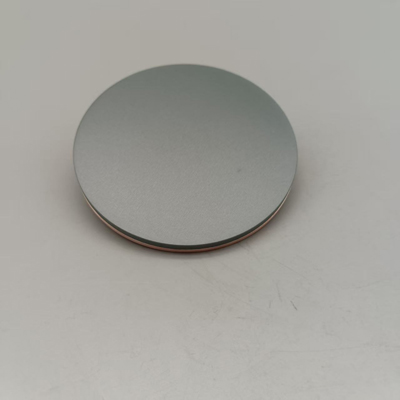
Matrix material: Zinc oxide (ZnO) doped with 2-5% aluminum (Al), chemical formula: ZnO:Al.
Core Characteristics:
Electrical Properties: Resistivity ~10⁻³~10⁻⁴ Ω·cm, can be optimized through doping.
Optical Properties: Visible light transmittance >85%, strong UV absorption (bandgap ~3.3 eV).
Mechanical Properties: High hardness (Mohs hardness 4.5), wear-resistant, suitable for flexible substrates.
Advantages: Abundant raw materials (Zn, Al), low cost (~1/10 of ITO), non-toxic and environmentally friendly.
Typical Applications: Thin-film solar cells, flexible displays, UV sensors, energy-saving glass coatings.
ITO Target (Indium Tin Oxide)
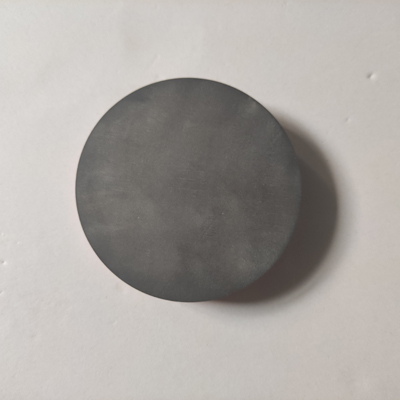
Basic Composition: Matrix material: Indium oxide (In₂O₃) doped with ~10% tin (Sn), chemical formula: In₂O₃:Sn.
Core Characteristics:
Electrical Properties: Extremely low resistivity (10⁻⁴~10⁻⁵ Ω·cm), currently the best conductive TCO material.
Optical Properties: Visible light transmittance >90%, wider bandgap (~3.7 eV).
Mechanical Properties: Brittle, prone to oxidation at high temperatures (requires inert atmosphere protection).
Advantages: Excellent combination of high conductivity and high transmittance, mature process (good magnetron sputtering compatibility).
Typical Applications: High-end display panels (OLED/LCD), touch screens, aerospace transparent electrodes.
Part II: Comparison of AZO VS. ITO Targets
| Comparison Dimension | AZO Target | ITO Target |
|---|---|---|
| Conductivity | Higher resistivity, suitable for mid-to-low-end applications | Extremely low resistivity, meets high-precision requirements |
| Transmittance | Slightly lower transmittance (85-90%), strong UV shielding | Higher transmittance (>90%), ideal for display devices |
| Cost | Low-cost raw materials (ZnO and Al), overall cost-effective | Relies on scarce indium resources, expensive and price-volatile |
| Environmental Impact | Non-toxic, suitable for mass production | Indium mining causes pollution, requires recycling |
| Stability | High-temperature resistant (<400°C), humidity-resistant | Prone to oxidation at high temperatures (>300°C requires protection) |
| Process Compatibility | Requires optimization of doping and deposition processes | Mature magnetron sputtering process, high yield |
Diverging Application Scenarios
1. AZO-Dominated Fields
Photovoltaics: Low-cost electrodes for thin-film solar cells (CIGS, silicon-based).
Flexible electronics: Wearable devices, foldable screens (superior bend resistance).
Environmental needs: Energy-saving architectural glass, UV-blocking coatings.
2. ITO’s Irreplaceable Applications
High-end displays: OLED/LCD screens, high-resolution touch panels.
Precision optics: Transparent electrodes for aerospace, infrared-reflective films.
Selection Recommendations
Scenarios Favoring AZO Targets:
Budget constraints: Low-cost needs such as photovoltaic power plants, large-area architectural glass coatings. Flexibility/durability requirements: Flexible electronics, wearable devices (AZO has superior bend resistance).
Eco-friendly focus: Compliance with regulations like RoHS for green manufacturing.
Scenarios Favoring ITO Targets:
High-performance displays: Fields with stringent demands for conductivity and transmittance, e.g., smartphone/TV screens. Short-term projects: Existing ITO processes are mature, enabling rapid mass production (avoiding AZO process debugging risks).
Specialized needs: Unique ITO functionalities like electromagnetic shielding or infrared reflection.
The competition between AZO and ITO is fundamentally a trade-off between cost and performance, not a zero-sum game. Over the next decade, they will evolve as follows: AZO: Dominates mid-to-low-end markets, driving green energy and flexible electronics. ITO: Retains high-end applications, mitigating resource pressures via recycling. Cross-Innovation: Hybrid materials and novel TCOs (e.g., GZO, FTO) may bridge intermediate needs.
Post time: Oct-14-2025