


In advanced manufacturing fields such as semiconductors, optical coatings, and hard coatings, target materials are the “heart” of Physical Vapor Deposition (PVD) technology. An interesting yet often confusing phenomenon for procurement novices is this: when you inquire about a “titanium-aluminum target” from a professional supplier, they will almost invariably ask: “Could you please specify the exact composition? Is it atomic ratio or mass ratio?”
This is by no means a salesperson being difficult or a cumbersome procedure. It marks the beginning of a precise technical dialogue. This article will use the classic pair of “Ti-Al” and “Al-Ti” as examples to delve into the critical technical logic and industry standards behind this question.
1. One Name, Multiple Possibilities: The Risk of Ambiguous Description
When you say “titanium-aluminum target,” what you envision and what the supplier understands could be worlds apart.
You might want: A target for depositing TiAlN super-hard coatings on cutting tools, expected to have excellent high-temperature performance.
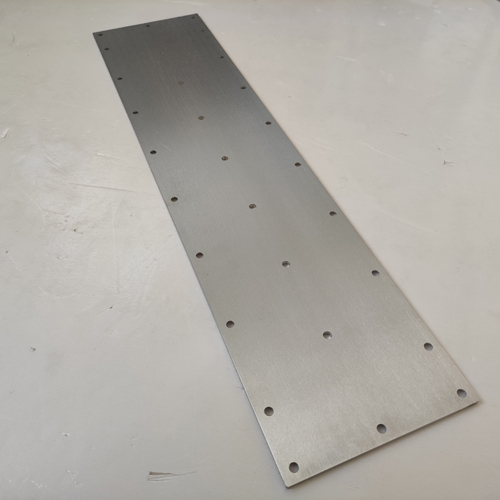
The supplier might think of: At least a dozen different materials, including:
- Ti₃Al (α₂ phase): Aluminum content ~22-35 at.%, slightly better plasticity.
- TiAl (γ phase): Aluminum content ~48-52 at.%, a typical lightweight high-temperature structural material.
- TiAl₃: Aluminum content ~75 at.%, very brittle, but excellent as a diffusion barrier layer.
- Or any other Ti-Al alloy with different proportions.
The consequences could be disastrous: If you need to deposit a TiAlN coating (optimal Al content ~50 at.%) but mistakenly use a TiAl₃ target (Al content 75 at.%), the deposited film will become brittle and prone to peeling due to excessive aluminum content, completely failing to achieve the expected hardness and adhesion. This could lead to scrapping an entire production batch and significant financial loss.
Similarly, “aluminum-titanium target” also covers a wide range, from aluminum-based solid solutions with 1% titanium (for microelectronic adhesion layers) to alloys with 10% titanium (for specific optical film stacks).
Conclusion 1: The industry terms “Ti-Al / Al-Ti” only indicate the element types, not a specific material. It’s like saying “steel” without specifying whether it’s mild steel or stainless steel.
2. Atomic Ratio (at.%) vs. Mass Ratio (wt.%): A Fundamental Distinction
This is the second core issue that must be clarified, and it serves as the “professional code” for communication between engineers and suppliers.
- Atomic Percentage (at.%): Refers to the proportion of the number of atoms. It directly determines the material’s crystal structure, phase composition, and fundamental physical/chemical properties.
- Mass Percentage (wt.%): Refers to the proportion by weight. Since titanium (atomic weight 47.87) is much heavier than aluminum (26.98), the numerical values differ significantly.
Example:
Suppose you need a Ti-50Al at.% target (i.e., the TiAl intermetallic compound).
- Its atomic ratio is: Ti : Al = 50 : 50.
- Converting to mass ratio gives approximately: Ti : Al ≈ 64 : 36 (Ti-36Al wt.%).
Now, consider another scenario: If you verbally request “a target with half titanium and half aluminum,” assuming mass ratio, you would actually receive an Al-50Ti wt.% target.
- Its mass ratio is: Al : Ti = 50 : 50.
- Converting to atomic ratio gives approximately: Al : Ti ≈ 73 : 27 (Al-27Ti at.%).
See the problem? The ambiguous description “half and half,” without specifying atomic or mass ratio, leads to completely different final atomic compositions (one with Al at 50 at.%, the other with Al at 73 at.%). Their properties and application scenarios would be entirely mismatched.
Conclusion 2: Communication is entirely ineffective without declaring the ratio type. In materials science, the atomic ratio (at.%) is the more fundamental parameter for defining a material.
3. How Composition and Ratio Determine the Final Outcome?
Why are suppliers so insistent on this? Because the composition and ratio directly dictate the following key aspects:
- The “Genes” of Thin Film Performance:
- Ti₃Al target → Film properties closer to pure titanium, high hardness but average oxidation resistance.
- TiAl target → Film is the standard precursor for TiAlN, combining high hardness and excellent high-temperature oxidation resistance.
- Al-2Ti wt.% target → Film is mainly aluminum, good conductivity, used for metallization layers in integrated circuits.
- Al-10Ti wt.% target → Film resistivity may vary, used to adjust the refractive index in specific optical film stacks.
- The “Roadmap” for Manufacturing Process:
- High-Ti content targets: May use vacuum melting or powder metallurgy.
- High-Al content targets: Mostly use melting and casting, but the melting temperature and casting process require precise control depending on the titanium content.
- Brittle phase targets: Like TiAl₃, cannot undergo conventional machining (turning, milling). They can only be formed by sintering or special processing, resulting in high costs.
- The “Standard” for Quality Inspection:
- The supplier needs to perform compositional analysis according to your specified composition and ratio and provide a report. Without a clear standard, acceptance becomes impossible.
4. Industry Best Practices and Communication Guide
To ensure you get the product you want at the right price, please follow this communication template:
Incorrect Communication:
“Hello, please quote the price and lead time for a titanium-aluminum target.”
Correct Communication (Providing Complete Technical Specifications):
“We need to procure a rotary target for magnetron sputtering to deposit TiAlN coatings on cutting tools.
Specific requirements are as follows:
- Material Comp
- Composition: Ti-50Al at.% (or Ti-36Al wt.%).
- Purity: 4N5 (99.995%).
- Dimensions: Outer Diameter Ø200mm, Inner Diameter Ø160mm, Length L1500mm. (Attach a drawing if available)
- Backing Plate Bonding: Copper backing plate, thickness mm.
- Quantity: 1 set.
Post time: Feb-10-2026