


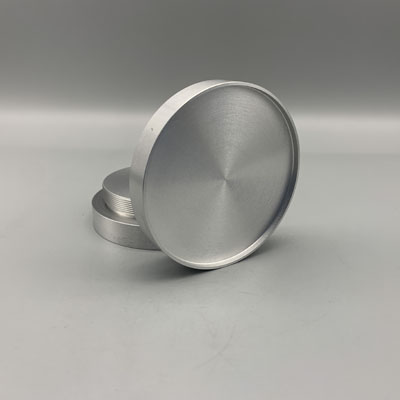
Sputtering targets are the core materials in physical vapor deposition (PVD) technology. Through ion bombardment, target atoms are deposited onto substrates to form functional thin films. Among them, aluminum chromium alloy sputtering targets play an indispensable role in semiconductors, display panels, surface protection, and other fields due to their unique performance advantages.
With the advancement of semiconductor industry autonomy and the iteration of display technology, the market demand for aluminum chromium sputtering targets continues to grow.
Performance Advantages of Aluminum Chromium Targets
Excellent Physical and Chemical Properties
Aluminum chromium sputtering targets combine the advantages of aluminum and chromium, offering high melting point, good thermal conductivity, and chemical stability.
These characteristics endow aluminum chromium thin films with excellent corrosion resistance, high hardness, and good mechanical properties, making them suitable for various harsh environments.
Flexible Composition Control
By adjusting the ratio of aluminum to chromium, the performance of the final thin film can be precisely controlled. Aluminum chromium sputtering targets can be used to prepare thin film materials with special functions, widely used in optical coatings, electronic devices, sensors, and other fields.
Diverse Application Scenarios
Based on these excellent properties, aluminum chromium sputtering targets demonstrate broad application value across multiple fields. From optical coatings to electronic devices, from wear-resistant coatings to metal material enhancement, aluminum chromium sputtering targets play important roles.
Preparation Processes :
Main Preparation Methods
The preparation of aluminum chromium sputtering targets primarily includes two process routes: melting casting and powder metallurgy.
In our team’s 2025 R&D case, we found that using powder metallurgy combined with hot isostatic pressing can effectively improve target density and performance consistency, achieving purity requirements above 99.9%.
Process Flow Overview
The production of aluminum chromium sputtering targets requires multiple precise steps: raw material ratio → melting/mixing → forming → sintering → mechanical processing → inspection and packaging. Each step must be strictly controlled to ensure final product quality.
Directions for Technological Breakthroughs
In recent years, target preparation technology has continuously advanced. Preparation processes such as powder metallurgy and hot isostatic pressing have progressed, effectively improving target density and performance consistency.
These technological advancements create conditions for aluminum chromium sputtering targets to be used in more high-end application scenarios.
Application Fields and Case Analysis
Applications in the Semiconductor Field
In semiconductor manufacturing, aluminum chromium sputtering targets are used to prepare functional films such as barrier layers and conductive layers.
Interestingly, chip manufacturing has extremely stringent requirements for target purity; 0.18µm processes require target purity of 5N or even 6N and above, driving the development of high-purity aluminum chromium sputtering target technology.
Applications in the Display Field
In the flat panel display industry, the simultaneous development of various display technologies (such as LCD, PDP, OLED, and FED) has driven demand for aluminum chromium sputtering targets.
Aluminum chromium sputtering targets are used in TFT-LCD, OLED, and other display panels for electrode and thin-film transistor preparation, affecting device conduction performance and display quality.
Surface Protection Field
Aluminum chromium sputtering targets can be used to prepare coatings with special surface properties, such as wear-resistant coatings and anti-corrosion coatings.
For example, in the tool coating field, aluminum chromium nitride coatings exhibit extremely high hardness and high oxidation resistance temperature, significantly improving tool processing efficiency and service life.
Aluminum Chromium Targets vs. Other Alloy Targets
To more intuitively demonstrate the characteristics of aluminum chromium targets, we compare them with other common alloy targets:
| Comparison Item | Aluminum Chromium Targets | Titanium Aluminum Targets | Nickel Chromium Targets |
|---|---|---|---|
| Corrosion Resistance | Excellent | Good | Medium |
| Hardness | High | Relatively High | Medium |
| Cost | Medium | Relatively High | Low |
| Applicable Processes | PVD, CVD | PVD | PVD |
| Main Applications | Optical coatings, electronic devices, protective coatings | Aerospace, medical devices | Electronic components, resistive films |
From the comparison, it is evident that aluminum chromium sputtering targets have significant advantages in comprehensive performance and are suitable for multiple high-end fields.
Common Misunderstandings in Use
⚠ Warning: Avoid These Misunderstandings About Aluminum Chromium Sputtering Targets
In practical applications, users often fall into the following misunderstandings:
Misunderstanding 1: Neglecting Purity Requirements
Different applications have varying purity requirements for aluminum chromium sputtering targets. The semiconductor field requires purity above 5N, while general industrial applications may only need 3N-4N purity. Blindly pursuing high purity increases unnecessary costs.
Misunderstanding 2: Overlooking Microstructure
Thin film performance depends not only on target composition but is also closely related to microstructure. The crystalline particle diameter and uniformity of the target are considered key factors affecting thin film deposition rates.
Misunderstanding 3: Limited Application Scope
In fact, aluminum chromium sputtering targets are not only suitable for traditional semiconductor fields but also have broad application prospects in new energy, medical devices, and other fields.
07 Operation Guidelines and Best Practices
Five-Step Method for Using Aluminum Chromium Targets
To fully leverage the performance of aluminum chromium sputtering targets, it is recommended to follow these operational guidelines:
Step 1: Requirements Analysis
Clarify the application scenario and technical requirements, and determine the required target purity, size, and composition ratio. For example, optical coatings and semiconductor barrier layers have different requirements for targets.
Step 2: Target Selection
Select the appropriate aluminum chromium sputtering target based on process requirements. Factors to consider include purity, density, grain size, and uniformity.
Step 3: Process Parameter Optimization
Adjust sputtering power, pressure, temperature, and other parameters to optimize thin film deposition rate and quality. Our team found that appropriately increasing the substrate temperature significantly improves the density of aluminum chromium thin films.
Step 4: Quality Monitoring
Monitor thin film thickness, composition, and structure in real-time to ensure they meet application requirements. Modern semiconductor manufacturing requires precise control of thin film thickness at the nanoscale.
Step 5: Performance Evaluation
Test the performance of the prepared thin films, including hardness, corrosion resistance, electrical properties, etc., to ensure they meet application needs.
Future Development Trends
Technology Upgrade Directions
In the future, aluminum chromium sputtering target technology will continue to develop toward higher purity and larger sizes. Target preparation processes will continue to advance, improving target density and performance consistency.
Expansion into Emerging Applications
The application potential of aluminum chromium sputtering targets in emerging fields such as energy storage devices, low-carbon environmental protection, and biomedical coatings is gradually emerging.
Deepening of Domestic Substitution
With the overall improvement of the domestic industry chain, a group of target companies with international competitiveness is expected to emerge. The continuous improvement in technology accumulation and production capacity scale of domestic companies will promote the import substitution of aluminum chromium sputtering targets in more high-end application scenarios.
Aluminum Chromium Sputtering Target Practical Operation Checklist
☐ Clarify application scenarios and technical indicator requirements
☐ Select aluminum chromium target with appropriate purity and specifications
☐ Optimize sputtering process parameters (power, pressure, temperature)
☐ Establish thin film quality monitoring methods and standards
☐ Plan performance evaluation and subsequent optimization directions
As a key component in the electronic materials field, aluminum chromium sputtering targets are developing toward higher purity and better performance alongside technological breakthroughs and industrial upgrades.
Post time: Nov-20-2025